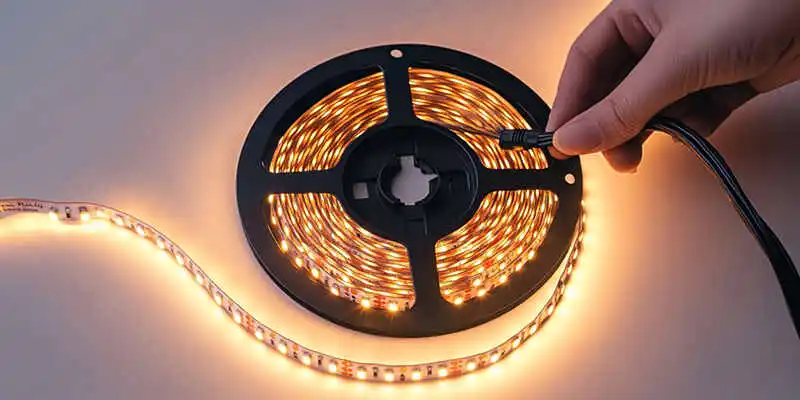
COB LED strip Light technology represents a significant improvement in the lighting industry, bringing revolutionary changes to modern Linear lighting solutions. This innovative lighting method not only enhances efficiency and performance but also offers designers and consumers unprecedented creative possibilities. This article will delve into the features, advantages, and disadvantages of COB LED strips,[...]
June 21, 2026
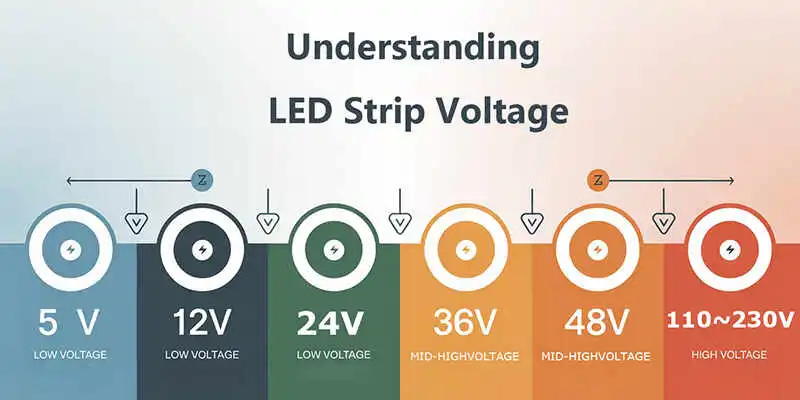
Understanding LED Strip Voltage and Current Requirements Before you power led strip, you need to get one thing straight: what voltage and current your LED strip needs. This isn’t something you guess—it’s typically printed right on the strip or listed in the product datasheet. For most general-purpose LED strips, you’ll see 5V, 12V,[...]
June 21, 2026
Introduction Installing LED strip lights is an easy and impactful way to elevate the look and functionality of both residential and commercial spaces. But achieving a clean, professional result takes more than just sticking lights on a surface—it requires proper planning, precise execution, and attention to safety. This comprehensive step-by-step guide walks you[...]
June 21, 2026
Introduction LED strip lights are available in several standard voltage configurations, primarily divided into low voltage LED Strip 12V/24V DC and high voltage LED Strip (usually 110V/220VAC, depending on your region). Each voltage level offers distinct advantages and considerations, making the selection process dependent on your specific installation scenario, safety requirements, and desired[...]
June 21, 2026
Introduction When it comes to addressable RGB LED strips, the WS2812B has long been a popular choice for DIYers, lighting designers, and hobbyists. However, as lighting technology has evolved, a newer chip—the SK6812—has emerged with several key improvements that make it a more versatile and reliable solution. In this article, we’ll explain the[...]
June 21, 2026
Introduction The WS2812B LED Strip and WS2811 LED Strip are two of the most popular addressable LED strip technologies on the market today, widely adopted across decorative, commercial, and industrial lighting applications. While they may serve similar purposes—delivering dynamic color effects and programmable control—they differ significantly in their internal architecture, voltage requirements, pixel control[...]