Why LED Lights Look Different: SDCM Explained

Have you ever installed several LED lights with the same specs—same wattage, same color temperature, same CRI above 90—yet noticed that the light still doesn’t look quite the same? You’re not imagining it. There’s more to light quality than just the basic specifications.

The Hidden Factor: Color Tolerance (SDCM)
While most buyers focus on wattage, color temperature (like 3000K or 4000K), and CRI, there’s another critical metric often overlooked: color consistency, also known as color tolerance or SDCM (Standard Deviation of Color Matching).
In simple terms, SDCM describes how close the color of LED light source is to another. A lower SDCM means less variation. When this value is below 3, most people won’t notice a difference in color between lights.
So, In theory, if you buy LED lights from different brands but with an SDCM of less than 3, the color should look the same, right?
Then Why Is There Still Color Variation?
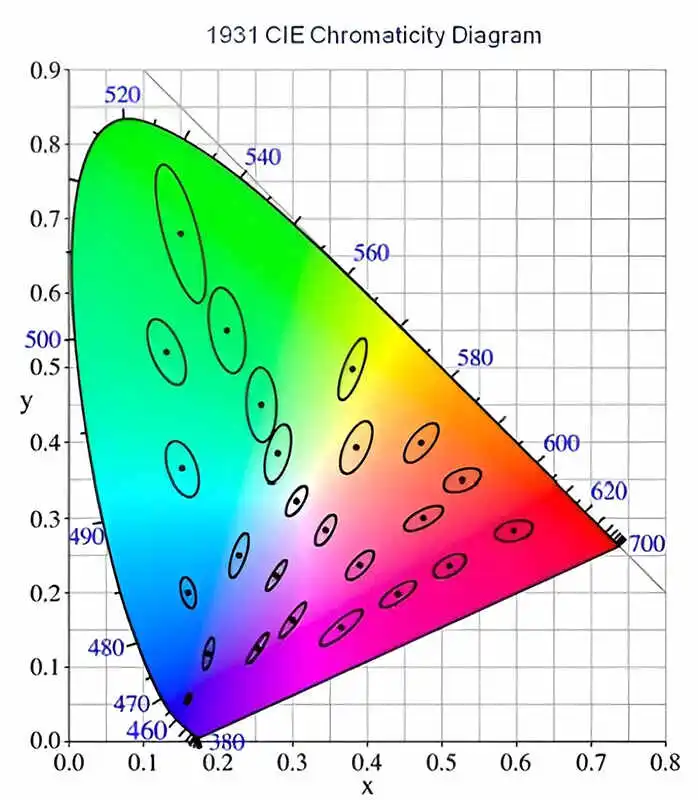
Here’s the catch: even with the same SDCM rating, different manufacturers may define their “target color point” slightly differently, even within the same color temperature and CRI range. Think of it like aiming at the center of a dartboard, but each brand defines the “bullseye” in a slightly different position.
This variation exists because there is no universal standard for how manufacturers pick their color binning areas, even when they all claim the same basic specs. Some use the CIE MacAdam ellipse method (widely used in Europe), while others refer to ANSI binning (common in the U.S.). Unfortunately, brands rarely mention which standard they follow, leaving buyers in the dark.

Does That Mean One Brand Is Better?
Not necessarily. This isn’t about quality—it’s about consistency. Each manufacturer chooses a color binning strategy based on their own internal processes and application goals. No one is right or wrong. But the incompatibility can become noticeable when mixing brands in the same lighting project.

The Simple Fix: Stick to One Brand per Project
If you’re a contractor, lighting designer, or end-user working on a commercial or residential space, the best way to avoid visible color differences is to use the same brand across the entire project, especially for linear lighting, downlights, or any fixtures placed close together.
Final Thoughts
Color consistency in LED lighting goes beyond color temperature and CRI. SDCM matters, but so does how each manufacturer defines and implements it. Until the industry agrees on a unified global standard, choosing one reliable brand for a single project is the most practical solution.