What is UV LED Strip? Everything you need to know

Ultraviolet (UV) LED strips are not your typical lighting solution. Instead of producing visible light for ambiance or decoration, they emit energy within the ultraviolet spectrum—typically between 100 and 400 nanometers (nm). This makes them a specialized tool with very different applications.
What sets UV LED strip lights apart from traditional UV lamps is their efficiency and form factor. They run cooler, last longer, and come in flexible tape-like designs that fit where bulky tubes cannot. Because of these advantages, UV strips have found their way into industries as diverse as resin curing, sterilization, forensics, horticulture, and entertainment.
At the same time, UV isn’t without its caveats. Certain wavelengths can pose health risks if misused, which is why understanding both the benefits and the precautions is critical. In this guide, we’ll explore UV LED strips in detail—from how they work and the types available, to where they’re used, what to watch out for, and how to install them safely.
What is a UV LED Strip?
When people think of LED strip lights, the image that usually comes to mind is colorful RGB tapes or soft warm strips tucked under cabinets and hotel coves. But there’s another category of strips that has nothing to do with mood lighting—they’re built for ultraviolet applications.
A UV LED strip looks similar in form to a standard strip, but instead of producing visible white or colored light, it emits radiation in the ultraviolet spectrum, typically between 365nm and 405nm. That makes it useful for tasks where visible light simply doesn’t work—curing UV resins, sterilizing surfaces, detecting counterfeits, or creating dramatic stage effects.
The advantage of UV strips over old-style fluorescent tubes is simple: they’re slimmer, run cooler, and can be mounted almost anywhere. In other words, they bring ultraviolet technology into places where traditional UV lamps would be too bulky or inefficient.
How UV LED Strips Work
Every LED—whether it produces visible light or ultraviolet—relies on the same principle: electroluminescence. When current passes through the semiconductor material, it releases photons. The difference lies in how the semiconductor is engineered. In UV LEDs, the materials are tuned so the photons fall within the ultraviolet spectrum rather than the visible range.
Different wavelengths serve different purposes:
- 365nm UV LEDs deliver “true UV” radiation. It’s invisible to the human eye but powerful for industrial resin curing, PCB processing, and laboratory use.
- 385–395nm UV LEDs sit at the near-UV range. They give off a faint violet glow and are widely used for resin curing, counterfeit detection, and the classic “blacklight” effect in entertainment.
- 405nm UV LEDs sit on the border between violet and UV. Because they emit part of their energy in the visible range, they’re safer for casual decorative use and popular in creative lighting setups.
In strip form, these LEDs are mounted on a flexible PCB and wired in series-parallel groups, powered by constant-voltage drivers—most commonly 12V or 24V. Like RGB or white LED strips, UV strips can be cut at defined intervals, then mounted in aluminum profiles or diffusers for better heat management and cleaner finishes.
Types of UV LED Strips
UV LED strips are not one-size-fits-all. They come in different variations depending on wavelength, power, and construction.
By Wavelength
365nm UV LED Strip — Best for resin curing, nail lamps, PCB solder mask curing.
385nm UV LED Strip — Balanced between curing and blacklight effects.
395–405nm UV LED Strip — Most common, widely used for entertainment, glow effects, and counterfeit detection.
By Power Density
Low-power UV strips (4–6W/m) for decorative or detection use.
High-power UV strips (10–20W/m) for curing, sterilization, or industrial applications.
By Protection Level
IP20: Non-waterproof, indoor use.
IP65/IP67/IP68: Waterproof silicone extrusion, suitable for outdoor or wet environments.
Common Applications of UV LED Strips
UV LED strips are more than a niche product; they’ve become indispensable tools across multiple industries. Their flexibility, compact design, and efficiency allow them to replace bulky traditional UV lamps in ways that make both engineering and economic sense. Below we break down the most important application areas.
1. Curing & Industrial Use
One of the biggest markets for UV LED strips is curing—using ultraviolet energy to harden inks, adhesives, and coatings. Strips in the 365nm and 395nm range are particularly effective.
- Electronics & PCB Assembly: UV curing helps fix components, prevent oxidation, and protect delicate circuit boards.
- Automotive & Furniture Finishing: UV-cured coatings deliver scratch resistance and faster production cycles.
- 3D Printing: Resin-based printers rely on UV LED strips to solidify each layer with pinpoint accuracy.
- Beauty & Cosmetics: Nail salons worldwide have shifted to UV LED curing lamps. These are essentially compact modules built on the same principle as UV strips, curing gels within seconds while consuming far less energy.
2. Sterilization & Hygiene
Where hygiene and sterility are critical, UV-C LED strips come into play. Operating between 200–280nm, they damage microbial DNA and RNA, preventing bacteria and viruses from reproducing.
- Water Purification: A client in Southeast Asia integrated UV-C strips inside stainless-steel housings for point-of-use water dispensers. Unlike traditional lamps, the strips fit compactly and deliver the same germicidal effect with lower maintenance.
- Air Purification: During the pandemic, several HVAC retrofits used UV strips inside ductwork to neutralize pathogens before air reached occupied spaces.
- Surface Sterilization: Hospitals and commercial kitchens now rely on portable carts equipped with UV LED strips to disinfect worktops and equipment quickly between shifts.
3. Security & Forensics
UV-A LED strip lights (365–395nm) are widely used to reveal what the eye cannot see.
- Authentication: Banknotes, passports, and ID cards carry UV-fluorescent inks that light up under UV LED strips.
- Forensic Evidence: Law enforcement uses UV strips to detect bodily fluids, fibers, and other traces at crime scenes.
- Event Security: Tickets and access passes often embed UV-reactive features visible only under controlled ultraviolet lighting.
4. Horticulture and Plant Science
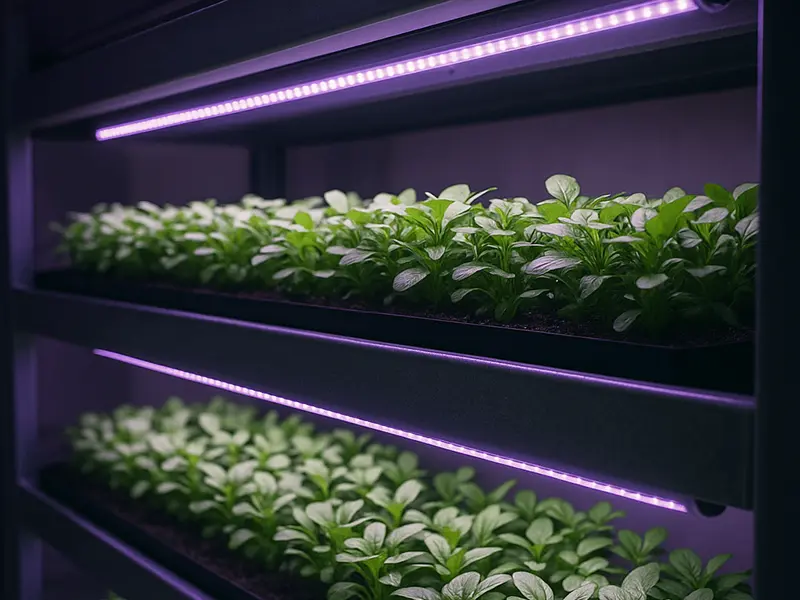
Plants respond to ultraviolet wavelengths in subtle but powerful ways. Controlled exposure through UV LED strips can boost yield, resilience, and quality.
- Greenhouse Trials: A tomato farm in the Netherlands experimented with UV-B strips installed alongside standard grow lights. The result was thicker skin, higher antioxidant levels, and longer shelf life.
- Indoor Grow Rooms: Controlled doses of UV-A helped reduce mold outbreaks in leafy greens. Farmers appreciated that strips could be cut and installed exactly where they needed coverage, rather than relying on bulky fixtures.Applications range from high-tech greenhouses to indoor grow rooms, where precise UV dosing helps growers achieve consistent, premium results.
5. Medical & Phototherapy
Medicine has long recognized the therapeutic potential of ultraviolet light. With UV LED strip lights, treatments are becoming more precise and portable.
- Dermatology: UV-B LEDs (around 310nm) are used in controlled doses to treat psoriasis, vitiligo, and eczema.
- Medical Device Assembly: UV-curable adhesives ensure strong, consistent bonds in everything from catheters to surgical instruments.
- Vitamin D Therapy: Controlled UV-B exposure supports vitamin D synthesis in patients with deficiency.
Here, compliance and safety standards are paramount—medical UV LED systems are typically paired with shielding and strict exposure limits.
6. Artistic and Decorative Effects
UV light isn’t always about science—it also creates spectacle. UV-A LED strips are widely used to generate blacklight effects.
- Nightclubs & Bars: UV-A strips make fluorescent paints and clothing glow, adding energy to live performances.
- Stage & Art Installations: One museum installation used 365nm strips hidden in walls. Under normal light, the exhibit looked plain; under UV, hidden fluorescent patterns revealed themselves, stunning visitors.
- Retail Displays: UV LED strips highlight packaging details and product labels that fluoresce, helping brands stand out in crowded retail environments.
7. Other Specialized Uses
While less common, UV strips also support niche but valuable fields:
- Gemology: Jewelers and labs use UV strips to distinguish natural from synthetic stones based on fluorescence.
- Pest Control: Insect traps rely on UV light to lure pests in agricultural and commercial settings.
- Military & Research: UV-C is used in “solar blind” detection systems and specialized communication technologies.
Advantages of UV LED Strips vs. Traditional UV Lamps
Anyone who has worked with ultraviolet lighting before knows the “old way”: bulky fluorescent tubes or mercury-vapor lamps humming away in a fixture. They did the job, but they came with compromises—heat, short life, and limited flexibility. UV LED strip lights are changing that equation. Let’s break down why.
1. Energy Efficiency
Traditional lamps are notorious for wasting energy as heat. By contrast, UV LED strips channel more power into usable ultraviolet output. Less heat means lower running costs, cooler equipment, and better protection for heat-sensitive materials like electronics or coatings.
2. Working Life
Ask any plant manager about lamp replacement and you’ll hear the same complaint: downtime and cost. Mercury lamps often fade or fail after just a few thousand hours. UV LEDs, by design, can run 10,000–25,000 hours, which means fewer swaps, less maintenance, and smoother operations.
3. Flexible Design
Try fitting a glass UV tube into a compact curing machine or a tight display case, it doesn’t work. A UV LED strip is thin, bendable, and cuttable, allowing engineers to design light exactly where it’s needed. This opens up applications that were never possible with rigid tubes.
4. Instant Control
Mercury lamps take time to warm up and cool down. and How is UV LED strips? They lighten instantly. That matters in curing lines, medical devices, or sterilization chambers where timing is critical. You switch them on, they deliver full output; you switch them off, no residual heat, no wasted energy.
5. Safer and Cleaner
One of the biggest differences: no mercury. Conventional UV lamps carry an environmental burden and strict disposal requirements. UV LEDs are mercury-free, easier to handle, and safer for both people and the planet.
6. Targeted Wavelengths
Legacy lamps emit a broad UV spectrum—some useful, much wasted. With UV LED strips, you can specify exact wavelengths (365nm for curing, 395nm for blacklight, 405nm for decorative, UV-C for sterilization). This precision means better results and less wasted energy.
7. Lower Heat Emission
Anyone who’s stood near a running mercury lamp knows how much heat they throw. UV LED strips run cooler, making them suitable for medical devices, PCB lines, or plastics that can’t tolerate high temperatures.
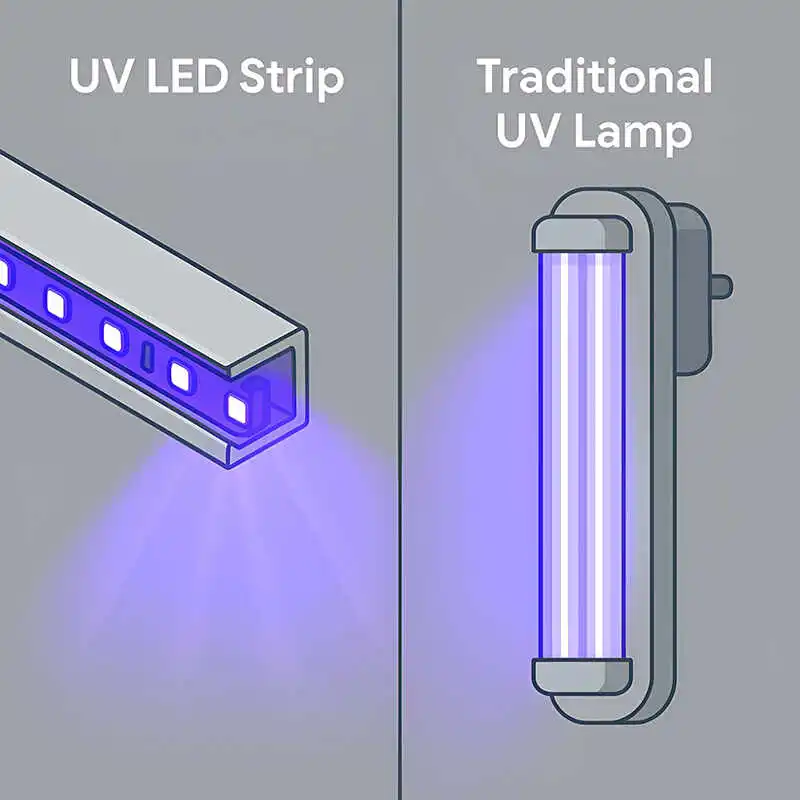
Quick Comparision
| Features | UV LED Strip | Traditional UV Lamps |
|---|---|---|
| Efficiency | High – minimal heat loss | Low – significant heat waste |
| Working Life | 10,000–25,000 hrs | 1000–5000 hrs |
| Factors | Flexible, compact, cuttable | Bulky, rigid tubes or bulbs |
| Control | Instant on/off | Warm-up and cool-down required |
| Environmental Impact | Mercury-free | Contains mercury, a hazardous waste |
| Wavelength Precision | Tuned to exact nm (365, 395, 405, UV-C) | Broad, less precise |
| Heat Emission | Low – safe for sensitive applications | High – adds unwanted thermal load |
| Maintenance | Minimal, easy to integrate | Frequent replacements, higher cost |
Limitations and Safety Considerations
Safety is the one topic that cannot be overlooked when working with UV LED strips. While these products open powerful opportunities, improper use can cause harm. Each UV band carries a different risk profile
UV-A (315–400nm)
the UV-A Strip Often called “blacklight.” It’s the least hazardous but not risk-free. Prolonged exposure to strong UV-A can accelerate skin aging, increase cancer risk over time, and strain the eyes. Always avoid staring directly into high-output UV-A strips.
UV-B (280–315nm)
This band penetrates less deeply but is more energetic. It’s the main cause of sunburn and is strongly linked to skin cancer. While carefully controlled UV-B is useful in medical phototherapy, uncontrolled exposure can damage eyes and skin quickly.
UV-C (100–280nm)
The most dangerous. Even short exposure can cause skin burns and serious eye injury. UV-C strips must never be used in open spaces without shielding. They are safe only inside enclosed systems (like water purifiers or sterilization boxes) where humans cannot see the light directly.
The key takeaway isn’t just that UV is dangerous—it’s that with the right design (shielding, timers, motion sensors, enclosures), UV LED strips can be applied safely and effectively
Recommended Protective Measures
Mitigating UV risks isn’t about avoiding the technology—it’s about applying it correctly. Practical measures include:
1. Avoid Direct Exposure
Never look directly into operating UV LED strips, especially UV-C. Unlike bright visible light, UV-C doesn’t trigger a natural blink or squint reflex. This makes accidental eye exposure particularly dangerous. Strips should be installed in ways that prevent line-of-sight exposure, such as inside enclosures or behind diffusers.
2. Wear Personal Protective Equipment (PPE)
In professional environments—labs, factories, or medical facilities—UV-blocking safety glasses should be standard practice. Goggles rated for UV wavelengths prevent eye damage, while long-sleeved clothing, gloves, or lab coats reduce skin exposure. For technicians performing maintenance, PPE isn’t optional; it’s a necessity.
3. Shielding and Control
Good design does half the work of safety. Installing strips inside aluminum profiles, frosted covers, or fully enclosed chambers prevents stray UV from escaping. In larger installations, access should be controlled—either with physical barriers or with interlocks that automatically switch off the system when someone enters the area.
4. Ventilation and Heat Management
While UV LEDs run cooler than mercury lamps, they still generate heat—especially in high-power curing or sterilization systems. Overheating reduces lifespan and can alter performance. Proper ventilation, whether passive airflow or active fans, ensures consistent output. In curing applications, ventilation also helps remove volatile by-products created when UV interacts with resins or coatings.
5. Engineering Best Practices
Beyond individual precautions, system-level design choices make the difference between safe and unsafe installations:
- Use timers or motion sensors to cut power automatically when people enter exposed areas.
- Add warning indicators—a visible light outside the chamber that signals when UV strips are active.
- Ensure products comply with international standards such as IEC 62471 (photobiological safety) and UL/CE certifications.
Conclusion
A UV LED strip is more than just another variation of LED lighting—it’s a tool that extends what lighting can achieve. By producing energy in the ultraviolet spectrum, these strips step into roles that visible light never could: curing high-performance coatings, sterilizing water and air, authenticating documents, enhancing plant growth, and even supporting medical therapies.
Compared to traditional UV lamps, UV LED strips deliver clear advantages: they are more efficient, longer lasting, mercury-free, and compact enough to fit where bulky tubes cannot. At the same time, they demand respect. Different wavelengths come with different levels of risk, and safety must always be engineered into the system—through shielding, PPE, ventilation, and compliance with international standards.
For designers, engineers, and facility managers, the key is balance. Understand what wavelength your project truly requires, size the power correctly, and integrate protective measures from the start. Do this, and UV LED strips become not just a light source but a reliable solution—one that saves energy, reduces maintenance, and unlocks new applications.
As with any technology, the best results come from working with the right partner. At Sunroleds, we don’t just supply UV LED strip lights—we engineer them with high-grade silicone extrusion, custom PCB design, and rigorous testing to meet demanding industrial and architectural standards. Whether you’re developing a curing system, designing sterilization equipment, or exploring new creative uses of ultraviolet lighting, we can help you specify the right wavelength, form factor, and protection for a safe and successful project.