LED Strip Voltage Options: Which is best for your Light Project
Introduction
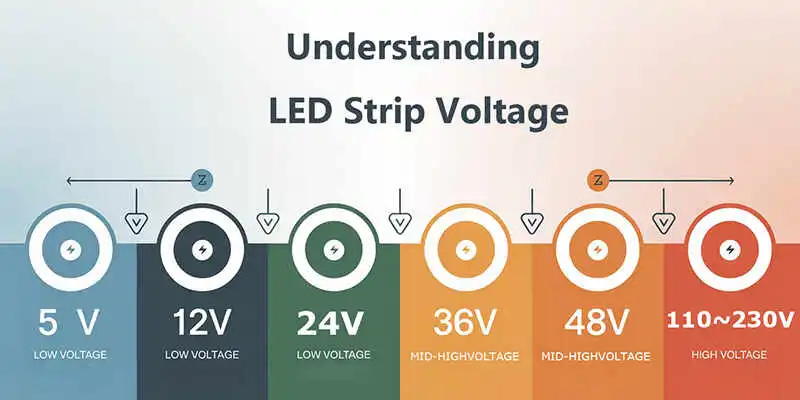
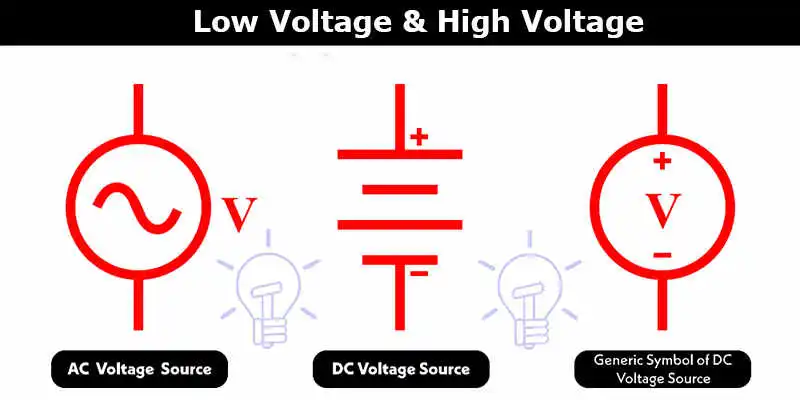
LED strip lights are available in several standard voltage configurations, primarily divided into low voltage LED Strip 12V/24V DC and high voltage LED Strip (usually 110V/220VAC, depending on your region). Each voltage level offers distinct advantages and considerations, making the selection process dependent on your specific installation scenario, safety requirements, and desired lighting quality. Understanding these characteristics is essential for both the optimal performance of the lighting system and its safe operation
Understanding LED Strip Voltage: Why it Matter
Voltage is more than a technical detail—it’s a core factor that affects the performance, safety, and practicality of your entire LED strip setup.
For short installations (typically under 5–10 meters), 12V LED strips are often the preferred choice. They offer safe, low-voltage operation, easy compatibility with battery packs and plug-in adapters, and shorter cutting intervals, making them perfect for precise, small-scale applications like under-cabinet lighting, vehicle interiors, or decorative accents.
However, as the length of your LED strip increases, voltage drop becomes a serious concern. When voltage falls along the strip, you’ll notice the LEDs at the far end becoming dimmer, discolored, or even flickering. That’s where 24V LED strips show a clear advantage. With their ability to maintain consistent brightness over longer distances (up to 20 meters), they’re ideal for medium to large projects, like long coves, retail displays, or ambient lighting in commercial spaces.
For even larger installations where extremely long continuous runs are required—such as building outlines, outdoor signage, or large architectural lighting—high voltage LED strips 220V become a practical option. These strips can extend up to 50 meters or more without noticeable voltage drop and often require only one power input. However, they’re less flexible, typically non-cuttable, and pose greater safety risks. Installation must be handled by licensed electricians to comply with local electrical codes and safety standards.
From a safety standpoint, low-voltage LED Strip Lights (12V or 24V) are much more stable. They significantly reduce the risk of electric shock, making them suitable for DIY installations, residential use, and areas where people might come into contact with the lighting. High-voltage systems, while powerful, require more precautions and are best suited to permanent or professional-grade projects.
Voltage also affects your power supply selection. Always match your LED strip voltage exactly—using a 24V power supply on a 12V strip can cause immediate damage. To ensure stability and long-term performance, choose a power supply rated at least 20% higher in wattage than your total LED load.
Finally, consider installation flexibility. 12V strips can typically be cut every 3 LEDs (or even shorter), which is helpful for tight spaces or detailed layouts. In contrast, 24V strips usually have longer cut intervals, but simplify wiring for long, seamless lighting effects.
In short, selecting the right voltage isn’t just about what works—it’s about what works best for your length, layout, safety, and system efficiency.
Comparative Summary Table: 5V vs 12V/24V vs 36V/48V vs 110V / 220V LED Strips
| Features | 5V LED Strip | 12V LED Strip | 24V LED Strip | 36V LED Strip | 48V LED Strip | 220V LED Strip |
|---|---|---|---|---|---|---|
| Maximum length | 1–3 meters (3–10 ft) | 5 meters (16ft) | Up to 10 meters(32ft) | 20 meters (65ft) | 30–50 meters (100–165 ft) | Up to 100m |
| Power Supply available | USB & 5V adapters | Very Common | Widely available | ⚠️Limited market options | ⚠️ Less standard | ⚠️Require AC Power |
| Current Draw | Highest | High | Medium | Low | Very Low | Lowest for equivalent power |
| Voltage Drop | highly sensitive | moderate | Good | excellent | excellent | excellent |
| Brightness | Moderate | Good | High | Superior | Very high | Commercial-grade brightness |
| Cutting Precision | very fine | Fine | medium | coarse | coarse | fixed segment |
| Heat Generation | Minimal | Low | Lower than 12V | Low | Minimal due to lower current | Highest |
| Working Life | Good | 30,000-50,000 hours | 30,000-50,000 hours | Long | Extended due to lower heat | Approximately 10,000 hours |
| Safety Level | Very Safe | Safe | Safe | Less Safe | Require cation | ⚠️ High risk |
| Installation Complexity | Very Easy | Easy | Easy | Advance | Advance | professional |
| System Efficiency | Good for very small projects | Good | Better than 12V | High | Highest | Good for very large installations |
| Cost Consideration | Low initial, high for long runs | Moderate | Moderate | Medium to high | Higher initial, lower long-term | Most cost-effective for large-scale projects |
5V LED Strips: Precision Lighting for Short-Run, High-Control Projects
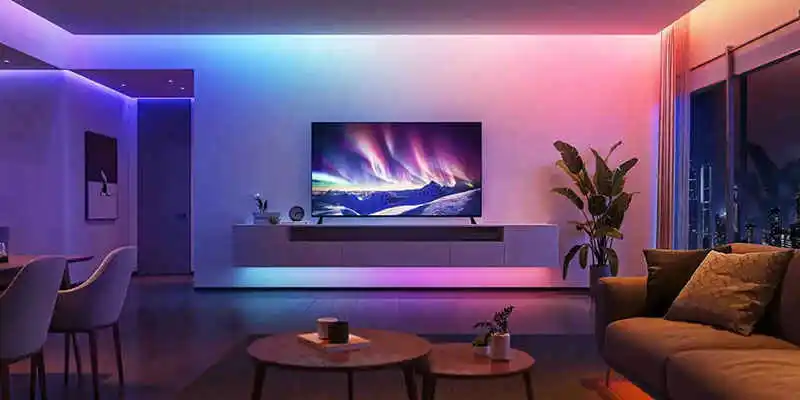
5V LED strips are known for their ultra-low voltage operation and high degree of flexibility in control and installation. Powered by 5V DC, they are natively compatible with USB ports, power banks, or compact wall adapters, making them highly convenient for plug-and-play setups. Most 5V strips integrate individually addressable RGB or RGBW LEDs, such as WS2812B or SK6812, and are available in high pixel densities, typically ranging from 60 to 144 LEDs per meter. This makes them an ideal choice for dynamic visual effects in compact spaces.
Advantages
1. Exceptional Portability
Their compatibility with USB power, power banks, and compact 5V adapters makes 5V LED strips perfect for temporary setups, small DIY projects, wearable tech, costumes, and portable lighting solutions.
2. Enhanced Safety:
Operating at a very low voltage significantly reduces the risk of electric shock, making these strips ideal for educational environments, children’s rooms, and beginner DIY enthusiasts.
3. Pixel-Level Precision and High Customizability:
5V addressable strips offer full control over each LED, enabling advanced lighting animations, gradients, and reactive lighting systems. Ideal for keyboard mods, PC case lighting, pixel displays, or even sound-reactive projects.
4. Energy-Conscious Design
While not suitable for high-power outputs, 5V systems offer low power consumption, making them efficient for battery-powered or low-current applications where brightness is secondary to aesthetic or function.
Limitations
1. Very Short Maximum Run Lengths
Due to voltage drop over the length of the strip, 5V LED strips typically cannot exceed 1 to 5 meters without noticeable dimming. Longer runs require frequent power injections to maintain consistent brightness.
2. Moderate Brightness Levels
Despite having high LED density, 5V strips operate within limited current and thermal thresholds, resulting in moderate brightness not ideal for large spaces or high-lumen requirements.
3. High Current Demand for Longer Runs
Lighting all LEDs at full white can demand significant current, leading to heating issues, thicker wire requirements, and careful circuit planning, especially for mobile or battery-powered systems.
4. Complex Power Management for Larger Projects
For anything beyond compact use, 5V installations require advanced electrical planning, such as proper voltage injection points, capacitor placement, and robust power supplies, reducing the appeal for larger-scale professional setups.
5. Complex Installation for Large Projects
While small-scale setups are straightforward, larger or brighter installations become more complex and less efficient, requiring advanced planning and power management.
Typical Use Cases
- USB LED Strip for decorative lighting, cosplay accessories, or wearable tech
- Small pixel displays, LED signage, and artistic installation models
- DIY projects needing addressable effects
- Desktop or shelf accent lighting
- Small decorative features (art, models)
12V LED Strip – Versatile for Short to Medium-Length Lighting Projects
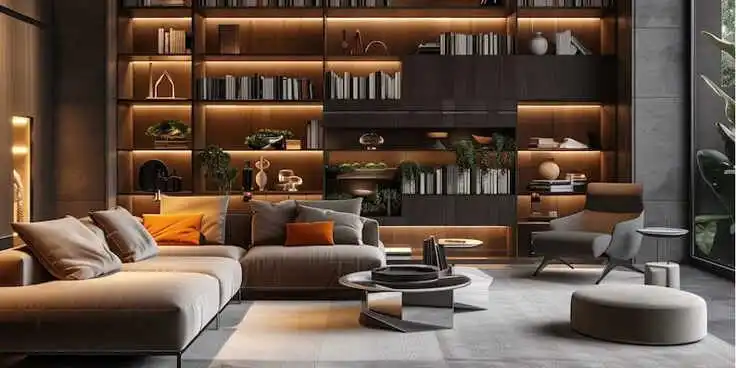
12 volt LED strips are among the most widely adopted voltage types due to their balance of safety, compatibility, and flexibility. They operate on 12V DC power, making them compatible with low-voltage power supplies, car batteries, RV systems, and many off-the-shelf LED controllers. Most 12V LED strips come in a variety of colors, such as single-color, RGB, RGBW, and sometimes addressable versions, offering ample choices for both functional and decorative lighting. Cut intervals are typically every 3 LEDs (about 5cm), making them easy to tailor to detailed layouts.
Advantages
1. Excellent Balance Between Safety and Performance
12V is low enough to remain safe for touch installations—ideal for indoor use—yet strong enough to support moderate run lengths without immediate voltage drop, making it a practical choice for both homeowners and professional installers.
2. Broad Compatibility Across Systems
12V LED strips are compatible with automotive systems, boats, RVs, solar setups, and consumer-grade LED controllers. This makes them a go-to solution for retrofits, vehicle customization, and mobile lighting systems.
3. Finer Cutting Precision
With shorter cut intervals compared to 24V strips, 12V strips offer more precise length customization, which is ideal for cabinet lighting, stair lights, display shelves, and any project requiring segmented or modular control.
4. Abundant Accessories and Aftermarket Ecosystem
Due to their popularity, 12V systems enjoy wide availability of accessories, from plug-and-play connectors and dimmers to programmable controllers and waterproof housings.
Limitations
1. Limited Maximum Run Length
Voltage drop becomes noticeable beyond 5–10 meters (16–32 feet), especially with high-power strips. Past this point, brightness may degrade unless power is reinjected at regular intervals.
2. Less Efficient for Long Installations
12V systems draw twice the current compared to 24V strips for the same power output, increasing wire gauge requirements and causing higher thermal stress on drivers.
3. Not Ideal for Large Commercial Projects
For very long or large-scale installations, using 12V strips may become cumbersome and inefficient, especially when multiple power supplies or boosters are needed.
Typical Use Cases
Under-cabinet and accent lighting in homes and retail environments
Automotive and marine interior/exterior mods
DIY lighting projects where moderate brightness and flexibility are needed
Staircase, shelf, or mirror backlighting
Solar-powered or battery-operated off-grid lighting setups
24V LED Strip – Optimized for long, uniform indoor and commercial Project

24V LED strips offer a significant upgrade over 12V systems when it comes to longer continuous runs and improved power efficiency. Operating on 24V DC, these strips draw half the current of their 12V counterparts for the same wattage, which means reduced voltage drop, less heat buildup, and more consistent brightness over greater lengths. Standard cut lengths are typically every 6 LEDs (around 10cm), slightly longer than 12V but still manageable for most installations.
Advantages
1. Longer Run Lengths Without Brightness Loss
With lower current draw per meter, 24V LED strips can maintain even brightness up to 10–20 meters (32–65 feet) per power injection point, making them perfect for hallways, coves, commercial shelves, and architectural lighting.
2. Improved Energy Efficiency
Less current means thinner wires, lower heat, and more stable power delivery. This contributes to longer power supply lifespan, fewer voltage drop issues, and simpler wiring schemes in complex installations.
3. Suitable for High-Power Lighting
Many high-brightness and high-output LED strips (e.g. 20W/m or more) are only available in 24V format, as the increased voltage enables better current management and heat dissipation.
4. Ideal for Centralized Power Supply Systems
24V systems can more easily support centralized power distribution, reducing the need for frequent power injection and streamlining cabling in large-scale layouts.
Limitations
1. Slightly Reduced Cutting Precision
Compared to 12V strips, 24V strips have longer cut intervals, which may limit flexibility in ultra-detailed or modular layouts.
2. Incompatible with 12V Controllers or Supplies
24V LED strips require dedicated 24V drivers, and using a mismatched voltage will lead to strip failure. This means a slightly higher entry cost for users converting from 12V systems.
3. Still Not Ideal for Ultra-Long or Outdoor Runs Without Additional Design
While more powerful than 12V, 24V systems still face voltage drop and should not exceed 20 meters without careful planning and possibly multiple power injection points.
Typical Use Cases
- Large commercial interiors like showrooms, offices, and retail stores
- Extended coves, ceilings, and architectural lines
- Exhibition booths, museum lighting, and gallery displays
- Linear wall washing in hotels or hospitality settings
- Warehouse, factory, or corridor lighting where long, even illumination is critical
36V / 48V – Special Voltage for Extended Run, Low-Drop installation
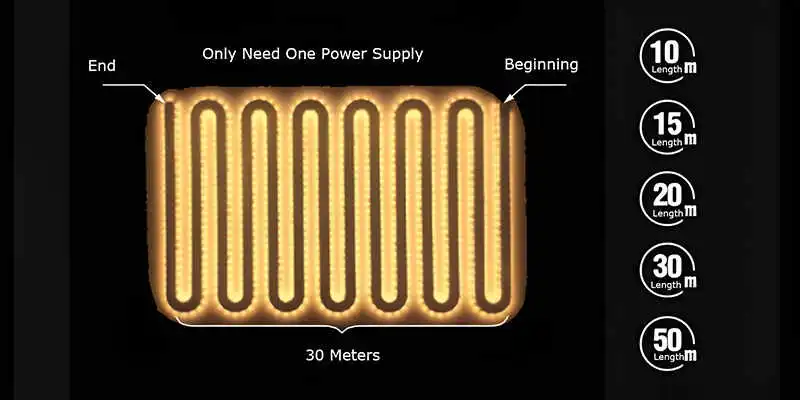
36V and 48V LED strips are not as common as 12V or 24V, but they serve a strategic role in high-power or large-scale applications where voltage drop and wiring complexity must be minimized. These strips operate on higher DC voltages, which means they require even less current per meter. This allows longer runs and fewer power injection points, especially in centralized or industrial lighting setups. Typically custom-ordered or project-specific, these strips are often paired with professional-grade drivers and power infrastructure.
Advantages
1. Ultra-Low Current Over Long Distances
Higher voltage means lower amperage for the same wattage. This allows for long cable runs without brightness fading, even in high-output lighting systems like 30–50W/m strips.
2. Reduced Wiring Size and Complexity
Because of the reduced current, thinner wires can be used over long distances without compromising safety or performance, saving on material cost and simplifying installation in large commercial or industrial spaces.
3. Centralized Power Management
Ideal for large-scale architectural lighting, 36V and 48V strips support centralized power distribution with minimal voltage drop, which reduces the need for multiple localized power supplies.
4. High Brightness Potential
Most very ultra bright LED strips (e.g., 4000–6000lm/m) run at 36V or 48V to maintain efficiency and thermal stability, especially for task lighting, industrial, or studio applications.
Limitations
1. Limited Availability and Compatibility
These voltage options are not widely available in consumer markets. They often require custom ordering, compatible drivers, and technical design knowledge, making them less suitable for DIY users.
2. Professional installation required
Because of the specialized voltage, these systems should be designed and installed by professionals, especially in high-output or mission-critical settings.
3. Incompatible with Standard Accessories
You’ll typically need dedicated power supplies, controllers, and protection systems, which means higher upfront costs and longer lead times for procurement.
Typical Use Cases
- High-output linear lighting for production facilities or inspection lines
- Large-scale architectural features with long, continuous runs
- Studio or photography lighting with precision color rendering
- Warehouses and industrial buildings require centralized control and minimal maintenance
- Projects requiring 100+ feet of lighting without voltage drop compromises
110V/ 230V LED Strip – Plug-and-Play for Extra-Long Outdoor or Commercial Runs

220V LED strips—commonly referred to as high-voltage LED strips—are designed for direct connection to mains electricity without requiring a traditional low-voltage DC driver. These strips use built-in rectifiers and current control circuitry, allowing users to connect them directly to AC power via a plug. They’re typically encased in thick waterproof silicone jackets (IP65) and sold in 50m or 100m rolls, pre-configured for fast installation.
Advantages
1. Ultra-Long Continuous Runs
Unlike 12V or 24V strips, which suffer from voltage drop over long distances, 220V LED strips can run up to 50–100 meters from a single power point without noticeable brightness loss—ideal for facade lighting, signage, or perimeter illumination.
2. Simplified Installation
With plug-and-play connectors and no need for external drivers, installation becomes fast and straightforward. This is especially beneficial for temporary events, large outdoor displays, or retail storefronts where setup speed matters.
3. Cost-Effective for Large Projects
High-voltage strips reduce the need for multiple power supplies and thick low-voltage cables, making them more economical for covering long distances in architectural or commercial projects.
4. Weatherproof and Durable
These strips are typically fully encapsulated, offering strong protection against moisture, dust, and mechanical wear. This makes them well-suited for exterior walls, billboards, bridges, or landscape lighting.
Limitations
1. Safety Risks
Operating at 220V AC introduces significant electrical hazards, especially in environments where the strips are exposed or within reach. Installation by qualified electricians is a must to meet safety codes and prevent shock or fire risk.
2. Limited Flexibility and Cut Options
220V strips are generally not cuttable at short intervals. Cut lengths may be fixed at 50cm, 100cm, or more, which limits precision for custom designs or tight spaces.
3. Heavier and Less Flexible Structure
Because of the thicker waterproof casing and internal components, these strips are less bendable than low-voltage alternatives, making them unsuitable for complex shapes or tight corners.
4. Not Suitable for Indoor Detail Work
Due to safety concerns and physical size, 220V LED strips are rarely used indoors for residential or close-up decorative purposes.
Typical Use Cases
- Outdoor architectural lighting: Building outlines, roof edges, signage
- Bridge and street lighting
- Large-scale perimeter or wall wash lighting
- Holiday lighting for commercial venues
- Industrial zones where ultra-long runs are essential
Decision Guide: Which Voltage Fits Your Project?
Choosing the correct LED strip voltage is not a one-size-fits-all decision—it depends heavily on your project size, installation location, safety requirements, budget, and power availability. Here’s a practical breakdown to help you make the right call
👉Choose 5V LED Light Strip If:
- You’re working on small DIY or USB-powered projects like PC case mods, cosplay, keyboard lighting, or portable setups.
- You need individually addressable pixels for animations or effects (e.g., WS2812B, SK6812).
- Your run length is short (under 1–2 meters), and power is supplied via USB or battery.
- Safety and compact form factor are critical.
👉 Choose 12 Volt LED Light Strip if:
- You’re lighting short to medium runs (up to 5–10 meters) like under cabinets, shelves, vanities, or car interiors
- You want a balance of flexibility, safety, and brightness.
- You’re using common accessories or power supplies that support 12V.
👉 Choose 24 Volt LED Light Strip if:
- You need to power medium to long runs (10–20 meters) without noticeable voltage drop.
- You want greater efficiency with thinner wires and fewer power feeds.
- The installation is for architectural, commercial, or continuous linear lighting where consistent brightness matters.
👉 Choose 36 Volt or 48 Volt LED Light Strip if:
- Your run length exceeds 20 meters, but you still want to stay within low-voltage safety limits.
- You’re integrating with industrial systems or building automation setups that provide higher DC outputs.
- You’re working with custom installations that prioritize energy efficiency and minimal voltage drop.
👉 Choose 220V / 230V LED Strip if:
- You’re running 50+ meters of outdoor lighting on facades, signage, or perimeter boundaries.
- You require a quick, plug-and-play solution with no drivers for ultra-long distances.
- You have access to licensed electricians and need a commercial Lighting solution.
Conclusion: Voltage is the Foundation of a Successful LED Strip Project
When planning any LED strip lighting installation, selecting the right voltage is one of the most important decisions you’ll make. It affects everything—from brightness consistency and energy efficiency to safety, installation cost, and long-term reliability.
To recap:
5V for compact, pixel-controlled DIY setups.
12V for short residential runs with high flexibility.
24V for longer commercial or architectural applications.
36V–48V for extended, high-efficiency, low-voltage industrial setups.
220V/230V AC for massive outdoor installations or ultra-long runs with minimal wiring.
Take time to evaluate your project’s length, layout, power availability, and user safety. Choosing the correct voltage upfront will save you time, money, and headaches down the road.