What Is Roll-to-Roll COB LED Strip? A Comprehensive Guide

What is a Roll-to-Roll COB LED Strip?
In today’s rapidly evolving LED lighting industry, Roll-to-Roll (R2R) COB LED Strips are gaining significant attention for their advanced manufacturing process and outstanding performance. But what exactly is a Roll-to-Roll COB LED Strip, and why is it becoming the go-to choice for high-end lighting projects?
Understanding Roll-to-Roll Chip on Board Technology
Roll-to-Roll (R2R) manufacturing is an advanced production method where materials are processed continuously on a flexible substrate, moving through each stage without any interruption.
When applied to Chip-on-Board LED strips, this method allows LEDs to be mounted directly onto a flexible PCB in one seamless process, resulting in a seamless reel without any solder joints. Unlike traditional LED strips, which typically have segmented soldering points, Roll-to-Roll COB LED strips offer uninterrupted construction across the entire length, Dot-Free, along with higher efficiency, greater durability, and enhanced flexibility.
COB LED Strip Definition
COB LED strips are linear lighting products where the individual LEDs are printed directly onto the circuit board. These diodes are placed extremely close together and covered with a phosphor gel, creating a continuous illumination effect without visible individual light points or “hot spots”. This design produces a smooth, uniform light that appears as one continuous, seamless line of light

Roll to Roll COB LED Manufacturing Process
In R2R COB LED production, manufacturers employ specialized equipment including:
Roll to roll continuous SMT machines
Roll to roll die assembly machines
Roll to roll AOI (Automatic Optical Inspection) machines
Roll to roll flexible PCBA splitting machines
Roll to roll phosphor glue coating machines
Roll to roll silicone extrusion production lines
The reel-to-reel COB LED strips are produced in a continuous process without any soldered joints on the entire reel, unlike traditional LED ribbons that are assembled and soldered in sections.
Key Advantages of Roll-to-Roll COB LED Strips
The R2R manufacturing process offers several benefits:
Higher Production Efficiency
As a result of the fully automated Roll-to-Roll process, manufacturing costs are optimized, production speeds are faster, and product consistency is greatly improved — meaning better quality at more competitive prices.
Seamless Light Output
Thanks to the continuous deposition of chips, R2R COB LED strips offer an ultra-smooth, dot-free lighting effect — perfect for applications requiring clean, uniform illumination, such as high-end linear lighting, under-cabinet lighting, or cove lighting.
Enhanced Flexibility
The Roll-to-Roll process results in a highly flexible LED strip that can bend and conform to curves and angles without damaging the chips. This flexibility opens up new design possibilities for architects and lighting designers.
Superior Durability (Solder Free Design)
Thanks to its seamless roll-to-roll manufacturing, there are no solder joints, which greatly reduces the risk of false soldering, cracking, or connection failures. This ensures greater product stability and a longer lifespan, especially in demanding applications.
Better Heat Dissipation
Continuous chip bonding across the strip improves thermal management, which enhances LED performance and minimizes lumen degradation over time.
Wide 180° Beam Angle
The 180-degree wide-emitting angle ensures broad light coverage—perfect for applications requiring continuous and uniform lighting, such as coves, ceilings, under-cabinet lighting, and architectural lines.
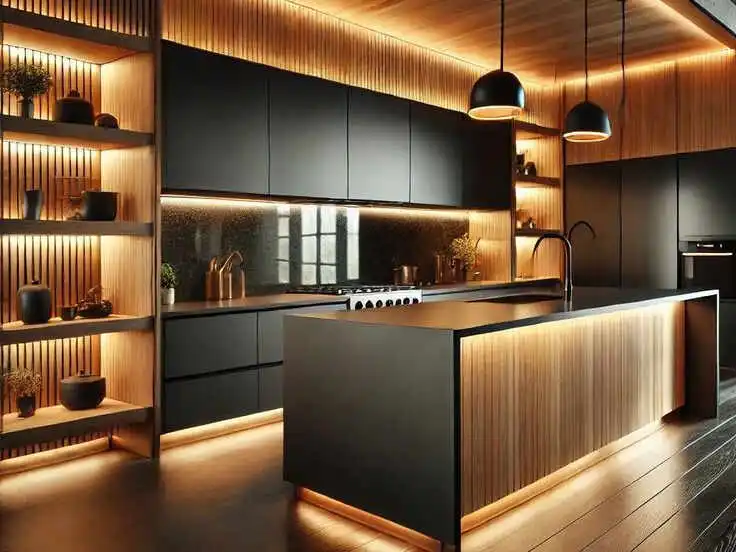
Where Are Roll-to-Roll COB LED Strip Lights Used?
R2R COB LED strips are ideal for a wide range of applications, including:
Architectural Lighting: Seamless integration into ceilings, walls, and facades.
Commercial Spaces: Retail shops, showrooms, and office lighting where visual uniformity is critical.
Residential Projects: Under cabinets, stairs, cove lighting, and decorative features.
Furniture and Under-cabinet Lighting: For precise, compact, and stylish lighting designs.
Custom Lighting Solutions: Perfect for bespoke lighting projects that demand flexibility and high-quality finishes.