Why Your Electricity Bill Is So High: The Secret Lies in Luminous Efficacy
Introduction: Why Luminous Efficacy Matters
As energy prices fluctuate and carbon reduction targets tighten, luminous efficacy (measured in lumens per watt) has emerged as the critical parameter balancing lighting performance with sustainability goals. The metric quantifies how effectively a light source converts electrical energy into visible spectrum illumination, with modern LEDs achieving 18x greater efficacy than traditional incandescent bulbs. For instance, replacing a 60W incandescent (15 lm/W) with a 9W LED (100 lm/W) maintains equivalent brightness while reducing energy consumption by 85%.
Global energy savings potential underscores its significance. The International Energy Agency estimates universal LED adoption could save 1,300 terawatt-hours annually by 2030 – equivalent to eliminating 650 million tons of CO₂ emissions. This positions luminous efficacy optimization as both an economic imperative and environmental necessity.
What Is Luminous Efficacy?
Luminous efficacy is a measure of how efficiently a light source produces visible light. It tells you how many lumens (light output) are generated per watt of electrical power consumed. The basic formula is:
Luminous Efficacy (lm/W) = Total Lumens / Power Consumption (Watts)
For example, if an LED bulb emits 1,000 lumens and consumes 10 watts of power, its luminous efficacy is 100 lm/W.
Luminous efficacy can be tested using an integrating sphere and a spectroradiometer in a controlled laboratory environment. These tools help measure the total luminous flux and electrical input with high precision. Reliable manufacturers often include this data in their product specifications, but not all LEDs are created equal—even if they claim the same wattage.
Understanding this metric allows you to compare different light sources more objectively. A higher luminous efficacy means less energy is wasted as heat, making the lighting not only cost-efficient but also more sustainable.
Historical Evolution of Luminous Efficacy
The progression from Edison’s incandescent bulbs (10 lm/W) to modern LEDs illustrates dramatic efficacy improvements:
| Lighting Technology | Typical Efficacy (lm/W) | Year of Commercialization |
|---|---|---|
| Incandescent | 10-17 | 1880 |
| Halogen | 12-24 | 1959 |
| Fluorescent | 50-100 | 1938 |
| LED (Commercial) | 80-180 | 2000 |
| LED (Laboratory) | 260+ | 2023 |
Source: U.S. Department of Energy Solid-State Lighting R&D Plan
What Affects Luminous Efficacy in LED Lights?
You might assume that all LEDs with similar specs will perform the same—but that’s rarely the case. Several factors can significantly affect how efficiently an LED converts electricity into light. Understanding these variables can help you choose better lighting and avoid wasting energy (and money).
Here are the key factors that impact luminous efficacy:
1. LED Chip Quality
The core component of any LED light is the chip itself. High-grade chips from leading brands offer better energy-to-light conversion and maintain performance over time. Cheaper chips may produce more heat than light, reducing efficacy.
2. Thermal Management
Heat is the enemy of efficiency. As the temperature rises, LED performance drops. Effective thermal design—such as aluminum PCBs, heat sinks, and good ventilation—helps LEDs stay cool and efficient.
3. Driver Efficiency
The LED driver determines how power is delivered to the chip. A low-efficiency driver wastes energy, often in the form of heat. High-quality drivers ensure that more of the input energy is converted into usable light.
4. Spectral Distribution
Light that aligns with the human eye’s sensitivity curve (around 555 nm) appears brighter per watt. Light sources with more energy in this visible range tend to have higher luminous efficacy, while those with more energy in infrared or ultraviolet regions are less efficient from a human perspective.
5. Color Temperature
Cooler color temperatures (e.g. 5000K–6500K) typically achieve higher efficacy than warmer tones (2700K–3000K). This is because their spectral peak is closer to the eye’s most sensitive range. Warmer LEDs sacrifice some efficiency for ambiance.
6. Source Technology
Different lighting technologies inherently have different luminous efficacies. LEDs outperform incandescent and halogen lamps by a large margin due to their superior energy conversion mechanisms. Even within LED tech, performance can vary widely.
7. Optical Design
The optics—such as reflectors, lenses, and diffusers—can make or break a lighting system’s overall efficiency. Well-designed optics focus and distribute light precisely, reducing waste and improving usable output without adding extra power.
8. System Integration
Even the best components can underperform if the system design is flawed. Factors like input voltage stability, current control, and circuit layout all affect final luminous efficacy in real-world applications.
Classification of LED Luminous Efficacy Levels (lm/W)
| LED Efficacy Level | Efficacy Range (Lm/W) | Typical Application | Description |
|---|---|---|---|
| Top LED Light | > 150Lm/W (some exceed 200Lm/W) | High-end commercial, specialized lighting | Maximum energy savings, highest brightness |
| High-performance LED Light | 100 – 150Lm/W | Residential, office lighting | Balanced brightness and efficiency |
| Standard LED Light | 80 – 100 Lm/W | General lighting | Affordable, moderate performance |
| Low-efficiency LED Light | <80 Lm/W | Low-end Lighting | Lower efficiency, higher electricity cost |
Why Luminous Efficacy Impacts Your Electricity Bill
Two LED lights consuming the same wattage might appear equally cost-effective initially, but their performance can differ significantly if their luminous efficacy varies. Luminous efficacy measures how efficiently a light source converts electrical power into visible light, expressed in lumens per watt (lm/W). A higher luminous efficacy means more brightness for the same energy consumption.
For example, if Fixture A has an efficacy of 150 lm/W and Fixture B has 90 lm/W, Fixture B requires about 67% more power to produce the same brightness as Fixture A. When multiplied across many fixtures, this difference leads to substantial increases in electricity usage and costs over time.
Beyond cost savings, higher luminous efficacy also contributes to sustainability. Efficient LEDs generate less heat, reducing the burden on HVAC systems and lowering carbon emissions. Thus, choosing LEDs with high luminous efficacy maximizes brightness while minimizing power consumption and operating expenses without compromising light quality.
In summary, luminous efficacy is a critical factor in evaluating LED lighting performance. Prioritizing high-efficacy LEDs is both a financially and environmentally sound decision, delivering better illumination at lower energy costs over the long term.
What Does High Luminous Efficacy Mean for Real-World LED Products?
At Sunroleds, we apply the principle of high luminous efficacy across our key product lines—from COB LED Strip Lights to Commercial Lighting and industrial LED Lighting.
These products are specifically engineered to deliver outstanding energy efficiency, reduce power consumption, and maximize lumen output—making them ideal for energy-conscious applications in retail, industrial, and architectural environments.
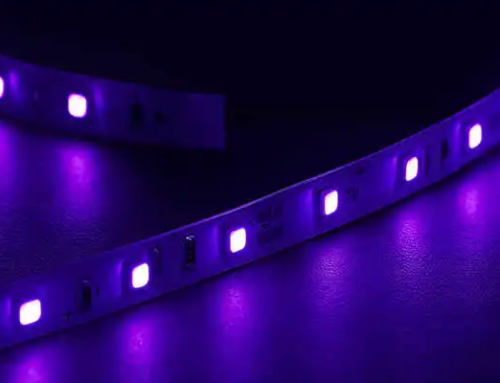
High Efficiency LED Strip Light up to 200Lm/W
With up to 160 lm/W and 200Lm/W light efficacy, our 2835 LED strips offer dot-free illumination and high CRI for precise color rendering—perfect for display cabinets, architectural accents, and linear lighting applications.


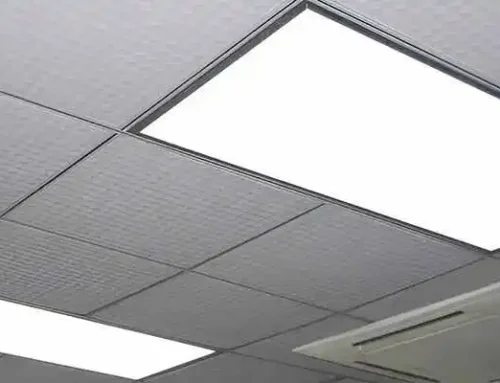
Ultra-Efficient LED Panel Lights 120Lm/W, 160Lm/W, 200Lm/W
Designed with uniform backlighting and ultra-thin frames, our LED Panels deliver 120–200 lm/W while maintaining flicker-free performance. Ideal for office, hospital, and educational facilities.
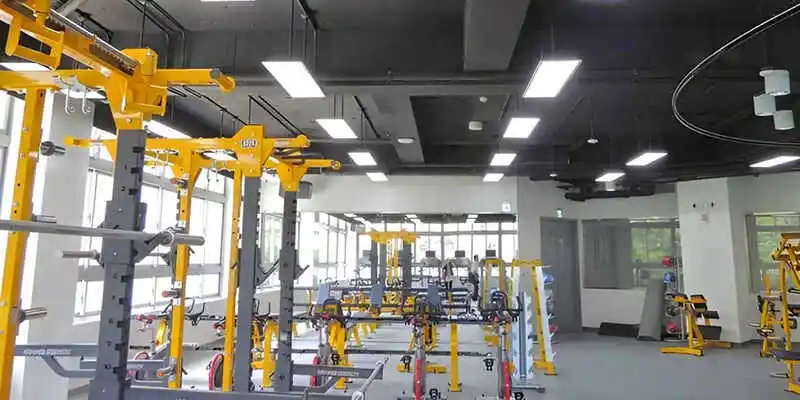
High Bay Lights for Industrial Efficiency 160Lm/W, 200Lm/W
Built for warehouses and manufacturing facilities, Sunro’s High Bay Lights achieve up to 200 lm/W, helping businesses cut energy costs while ensuring optimal visibility.
Conclusion
In summary, selecting between the two should be based on the desired lighting effect, functional requirements, and the spatial context, often with the best lighting environments combining both for maximum flexibility and impact. By understanding the key differences between LED downlights and spotlights, you can design lighting schemes that are both beautiful and practical.
Looking for professional LED lighting solutions? At Sunroleds, we offer high-performance downlights and spotlights designed for long-term reliability, elegant design, and energy efficiency. Whether it’s for your home, retail project, or commercial space, we’re here to help you shine.