LED Strip Adhesive Tapes: How to Choose the Right 3M Backing for Your Project
Introduction
Have you experienced that a week or two after a clean install, the LED strip starts peeling off, curling down from the edges, or worse—falling off completely?
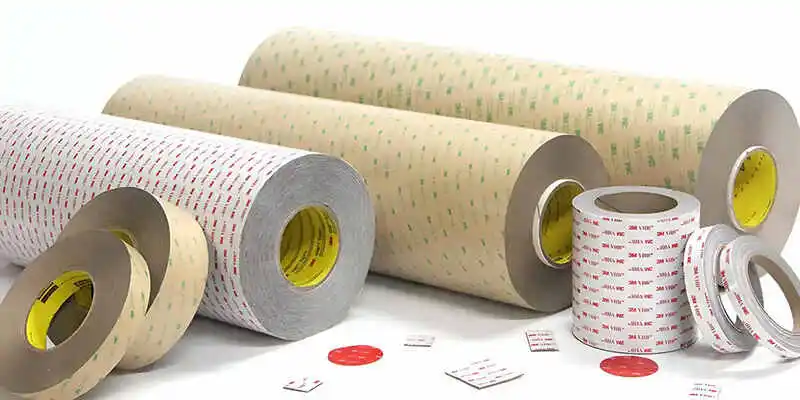
That’s where adhesive tape—specifically 3M tape—comes in. It might seem like a small detail, but it can make or break your LED project. A reliable adhesive tape doesn’t just hold your light strip in place—it protects your design, saves on rework, and ensures consistent performance over time. Especially in commercial and outdoor projects, where humidity, heat, or surface texture can challenge even the strongest LED products, the choice of adhesive tape is just as important as the LED strip itself.
Not all 3M double-sided adhesive tapes are the same. Each type is engineered for specific surfaces and environments, and choosing the wrong one can lead to weak bonding, premature failure, or unnecessary cost. In this guide, we’ll break down the most commonly used 3M adhesive tapes in the LED industry—VHB, 300LSE, 9080A, and more—so you can make the right decision for your application, whether it’s metal, plastic, glass, or textured surfaces.
Let’s dive in and make sure your next LED project sticks—literally.
What Makes Orginal 3M Adhesive Tapes Stand Out?
When it comes to adhesive backing for LED strip lights, 3M isn’t just a familiar name- it’s the gold standard that professionals trust. But what exactly sets 3M adhesive tapes apart from the run-of-the-mill options?
The secret lies in meticulous engineering, deep understanding of surface science, and decades of proven performance in real-world conditions. Unlike cheap adhesives that might hold on for a few hours or days, 3M tapes are crafted to deliver a steady, reliable bond that endures-even when faced with humidity, rough textures, extreme temperatures, or tricky vertical surfaces.
Here’s why 3M tapes have earned their reputation as the go-to choice for LED lighting installations:
1. Tailored for Every Surface
Not all surfaces behave the same. Whether it’s plastic, aluminum, wood, glass, or powder-coated metal, each material demands a different approach. 3M offers specialized adhesives designed specifically for low surface energy materials like plastics, as well as high surface energy surfaces like metal and glass. This means your LED strips stick securely and last longer, rather than relying on a generic, one-size-fits-all tape.
2. Built to Withstand the Tough Stuff
Everyday conditions like vibration, temperature swings, UV rays, and moisture can cause ordinary adhesives to fail. But 3M’s VHB (Very High Bond) tapes are engineered to resist these challenges, holding firm even under constant stress. That’s why they’re trusted for architectural lighting, vehicles, outdoor signage, and more.
3. Clean, Hassle-Free Installation
Installers appreciate 3M tape because it applies smoothly, peels off cleanly, and doesn’t leave behind sticky residue. This makes maintenance, upgrades, or repositioning a breeze, especially important in commercial or rental spaces where flexibility matters.
4. Consistent Quality You Can Count On
For manufacturers and distributors, 3M tapes deliver uniform quality from batch to batch. This consistency reduces failures and warranty claims, ensuring the adhesive’s performance matches the high standards of premium LED products.
In short, Original 3M adhesive tapes combine smart design, durability, and ease of use to provide a reliable, professional-grade solution for LED strip lighting, making them the trusted choice for both installers and manufacturers alike
Common 3M™ Adhesive Tapes Used in LED Strip Applications
Not all 3M tapes are created equal, and choosing the right one for your LED strip project depends on more than just “stickiness.” You need to consider the mounting surface, temperature range, installation environment, and whether the LED strip will be permanent or temporary.
Here’s a breakdown of the most common 3M adhesives used in the LED lighting industry—and when to use each:
| Tape Type | Adhesive Type | Bonding Surface | Adhesive Thickness (mil) | Application |
|---|---|---|---|---|
| 3M™ 200MP | High Performance Acrylic | Metals (steel, aluminum), HSE plastics (acrylic, PC, ABS, PET | 2- 5 mils | Indoor |
| 3M™ 300MP | Medium-strength acrylic | Smooth metals (e.g., aluminum, stainless steel), glass, ABS, polycarbonate, acrylic | 2–8 mils | Indoor |
| 3M™ 300LSE 9495 | LSE acrylic adhesive | Polypropylene (PP), polyethylene (PE), powder-coated metals, textured plastics, oily or low energy surfaces | 0.17 mm / 6.7 mil | Indoor |
| 3M™ 300LSE 9472 | LSE acrylic adhesive | Same as above: PP, PE, powder coating, rubber, rough plastics | 0.13 mm (5.2 mil) | Indoor |
| 3M™ VHB 5604 | High-strength VHB foam | Metal, glass, painted surfaces, powder-coated metals, HSE plastic, LSE Plastic, Wood, and outdoor surfaces | 0.4 mm (16 mil) | Waterproof strip / Outdoor |
| 3M™ VHB 5925 | High-strength VHB foam | metals, plastics, Composites, painted surfaces, glass, and irregular surfaces | 0.64 mm (25.6 mil) | Indoor/Outdoor |
| 3M™ 9080 | double-sided Acrylic | Smooth metals, plastics, metals, glass, wood, ceramics, paper, and coated or varnished surfaces | 0.16 mm (6.3 mil) | Indoor/outdoor |
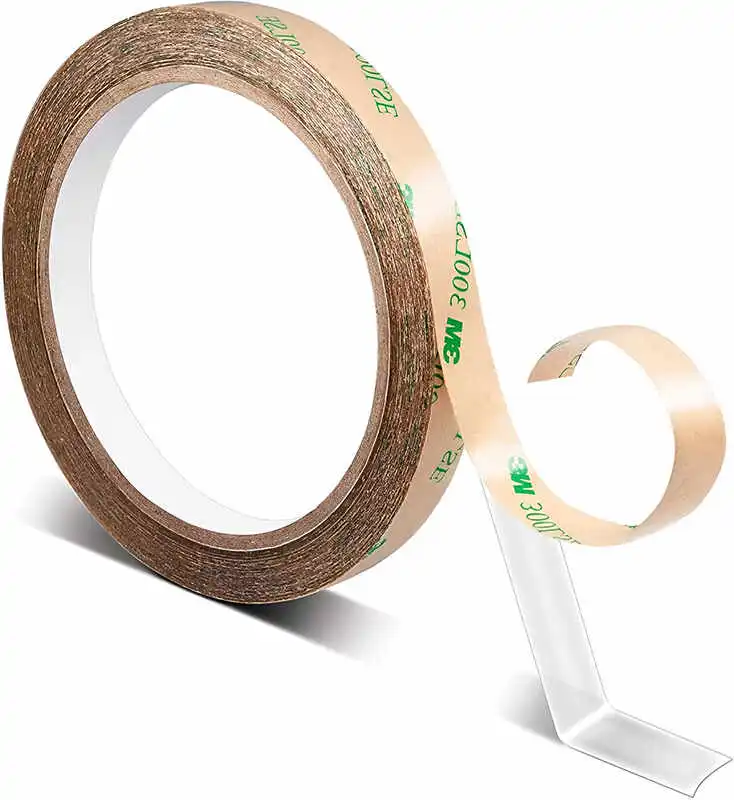
3M™ 300LSE Adhesive Tape
Type: Acrylic, optimized for low surface energy substrates
Strengths: Excellent bonding to difficult materials like polypropylene (PP), powder-coated metals, and certain rubbers
Applications: polypropylene (PP),powder-coated metals, oily metal surfaces, glass, and painted plastics
Typical Thickness: 0.13–0.17 mm (5–6.7 mil)
Pros: Strong bond on “hard-to-stick” surfaces
Cons: Slightly lower initial tack — needs good surface prep
Best for: LED strips mounted on rough, powder-coated, or plastic surfaces
3M™ 300MP Adhesive Tape
Type: General-purpose acrylic adhesive
Strengths: Good shear strength, solid initial tack, fair temperature resistance. Though its heat resistance is slightly lower compared to 200MP, it performs adequately in many indoor environments.
Applications: Smooth surfaces like painted metals, glass, and plastics
Pros: Versatile, affordable, widely used
Cons: Not ideal for textured or low surface energy (LSE) materials
Best for: Indoor use on smooth aluminum profiles, PVC channels, and finished furniture
3M™ 200MP Adhesive Tape:
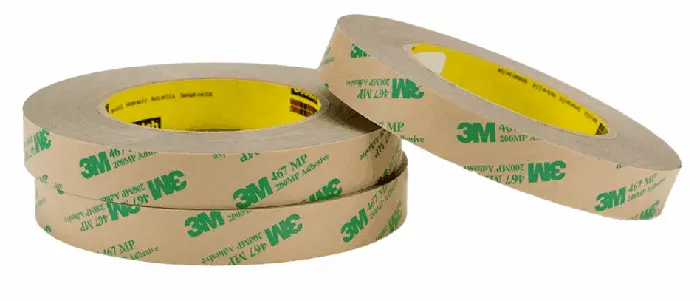
Type: High-Temperature and General Purpose Bonding
Strengths: Outstanding shear strength, high clarity, and resistance to harsh chemical environments, including exposure to organic solvents, weak acids/bases, and cleaning agents
Applications: Metals, plastics (HSE/LSE), Glass and Ceramics, Woods, painted/sealed surfaces
Pros: Durable, reliable under pressure and heat
Cons: Higher cost, not suitable for LSE or rough surfaces
Best for: Permanent installations where reliability over years is critical (e.g., high-end LED fixtures)
3M™ 5925 VHB Adhesive Tape:
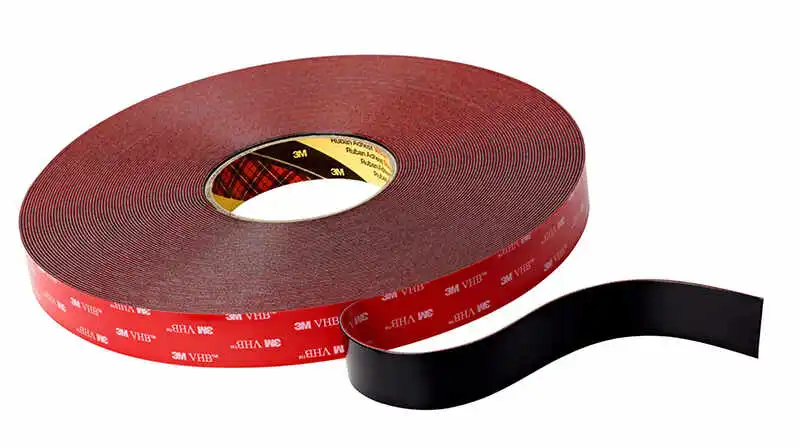
Type: VHB acrylic foam tape, black, 0.64mm thick, 12mm wide
Strengths: Strong adhesive with moderate conformability; performs well on both painted metals and plastics
Applications: Back-mounted LED strips, outdoor lightboxes, glass/aluminum panel installations
Pros: Good peel and shear strength, UV and moisture resistant
Cons: May require surface priming on difficult substrates
Best for: Outdoor or semi-outdoor LED installations where vibration and exposure to heat/moisture are concerns
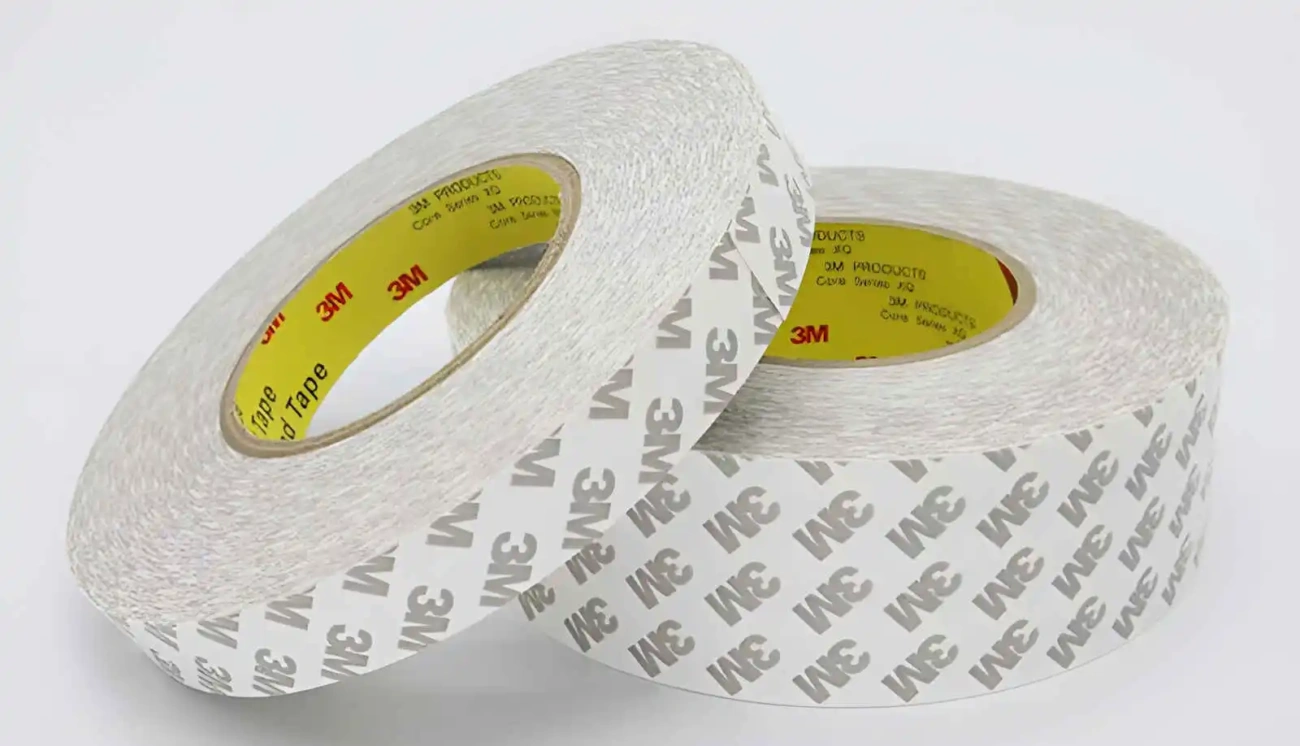
Type: Double-sided tissue tape with high tack acrylic
Strengths: Good adhesion to both high and low surface energy materials, thin and flexible
Applications: Indoor LED strips on clean plastic or wood
Pros: Cost-effective, easy to apply
Cons: Lower durability in high humidity or heat
Best for: Temporary indoor LED strip installations or DIY home décor
Type: Transparent double-sided PET tape
Strengths: High temperature resistance (up to 200°C), excellent bonding strength, UV resistant
Applications: Glass, metal, ABS, PC, powder-coated aluminum
Pros: Ultra-clear, strong, works well in demanding environments
Cons: Premium pricing
Best for: Transparent or backlit LED designs, or when aesthetics and strength both matter
Key Factors to Consider When Selecting Adhesive Tape
Choosing the right adhesive tape isn’t just about picking the stickiest option — it’s about matching the tape to your specific application environment, materials, and installation needs. Here are the key factors that should guide your decision:
1. Surface Material Compatibility
Is your LED strip going on aluminum, plastic, painted drywall, or powder-coated metal?
- For low surface energy (LSE) materials like PP, PE, or powder-coated surfaces, look for tapes like 3M 300LSE or 9472LE, which are specially formulated to bond with “hard-to-stick” surfaces.
- For smoother, high-energy surfaces like bare aluminum or glass, 3M VHB or 300MP tapes offer a stronger, more permanent hold.
2. Application environment
Select the adhesive based on temperature, humidity, load, and whether the installation is indoors or outdoors.
3. Load and Stress Requirement
Will the LED strip be suspended overhead, supporting its own weight or attached to a vertical surface?
- For heavier light bars or long runs that require strong shear strength, structural-grade tapes like 3M 4950 or 3M 9088 are a smart pick.
- If flexibility and removability are important (e.g., temporary installations or displays), a thinner, conformable adhesive like 3M 9080 may suffice.
4. Tape Thickness & Surface Texture
Rougher or uneven surfaces need thicker adhesives to fill in the micro-gaps and maintain grip.
- Thicker foam-based tapes like VHB 5604 (1.1mm) or 4229 (1.2mm) offer both cushioning and reliable bonding, ideal for irregular surfaces.
- Thinner tapes like 300LSE (0.13 mm) work best on smooth, clean, flat surfaces where minimal gap-filling is required.
Final Tips & Recommendations
Choosing the right adhesive tape is only half the battle — how you apply it can make or break the success of your LED lighting installation. Whether you’re outfitting a retail display, architectural cove lighting, or outdoor signage, here are a few tried-and-true tips to ensure your LED strips stay put and perform their best.
1. Always Prep the Surface
Clean the mounting surface thoroughly with isopropyl alcohol (IPA). Make sure it’s:
Dry
Dust-free
Smooth or uniformly textured
Avoid using water or household cleaners, which may leave residues and reduce bonding strength.
2. Avoid Porous or Oily Materials
Even premium tapes like 3M VHB or 300LSE struggle with untreated wood, raw concrete, or greasy plastics. If you’re unsure, test a small section first or use a primer or surface enhancer.
3. Apply Firm, Even Pressure
Once positioned, press the LED strip firmly and evenly along its entire length. A roller tool or even your thumb can help activate the adhesive and ensure full contact with the surface.
Tip: Wait 24–72 hours for maximum bond strength before subjecting the strip to heavy vibration, heat, or moisture.
4. Don’t Re-stick Multiple Times
Adhesives lose effectiveness each time they’re peeled and reapplied. If you make a mistake during placement, it’s best to replace the tape with a fresh strip rather than hoping for a second bond.
5. Mind the Environment
For high-temperature, humid, or outdoor installations, always choose tapes rated for such conditions, like 3M VHB 5604 or GPH. These are formulated to resist UV, thermal cycling, and weather changes.
6. When in Doubt, Use Mounting Channels
If your installation will be exposed to stress, such as upside-down placement, overhead lighting, or rough surfaces, consider using aluminum channels or brackets in combination with tape for extra support.
Conclusion
Investing in high-quality LED strips deserves equally reliable adhesive solutions. Cheap tape might save you a few cents upfront, but it can cost you hours of rework, dissatisfied clients, or safety issues down the road. At Sunroleds, we choose only Authentic 3M adhesive tapes tailored to each product — because your lighting project deserves to look as good on Day 500 as it does on Day 1