How to Install LED Panel Lights: A Comprehensive Guide for Flawless Illumination

Introduction
LED panel lights have revolutionized modern lighting, offering energy efficiency, sleek aesthetics, and versatile installation options. Whether you’re upgrading a drop ceiling in an office, adding surface-mounted fixtures to a residential kitchen, or suspending panels for an industrial-chic look, the process demands precision, safety awareness, and attention to detail. Below is a refined, step-by-step guide to ensure your LED Panel light installation is both professional and hassle-free.
Gathering Your Toolkit: What You’ll Need
Success hinges on having the right tools at hand. Assemble these essentials:
Core Components:
- LED panel lights (with integrated or external driver).
- Mounting hardware: Brackets, screws, suspension kits (depending on installation type).
- Wire connectors, wire strippers, and a voltage tester.
Tools:
- Drill with masonry/drywall bits, screwdrivers, measuring tape, level, and pencil.
- Ladder or step stool, safety gloves, and impact-resistant glasses.
Optional Extras:
- Drywall saw (for recessed installations).
- Suspension cables and ceiling anchors (for hanging fixtures).
Pro Tip: Always cross-reference the manufacturer’s LED Panel Light installation manual—some panels require unique brackets or connectors.
Safety First: Non-Negotiable Precautions
Safety is paramount during the installation of the LED panels. You must:
1. Switch off the main power supply at the circuit breaker and confirm with a voltage tester that the wires are not live.
2. Use tools with insulated handles when working with electrical connections.
3. Wear gloves and safety goggles for physical and electrical protection.
4. Ensure the mounting surface or ceiling grid can support the fixture’s weight, especially in drop ceilings or when using heavy panels.
5. Do not cover LED panel lights with insulation or any material that would interrupt heat dissipation.
6. Carefully follow the manufacturer’s instructions and wiring diagrams.
How to Install LED Panel Lights: Step by Step Guide
Recessed LED Panel Light Installation: Sleek and Seamless
Ideal for: Offices, drop ceilings, modern homes.
Step 1: Prep the Ceiling
Turn off the power and remove the ceiling tile where the panel will reside.
Verify the grid’s integrity—reinforce if necessary with additional supports.
Step 2: Wiring the Panel
Open the panel’s junction box. Match wires:
Black (Live) → Black
White (Neutral) → White
Green/Bare (Ground) → Ground terminal
Secure connections with wire nuts, tuck wires neatly, and close the compartment.
Step 3: Mounting the Panel
Tilt the panel into the grid opening, then lower until flush.
Engage built-in spring clips or brackets to lock it in place. For heavier panels, add safety cables.
Step 4: Test and Adjust
Restore power. If the panel flickers or dims, recheck connections. Adjust alignment using a level.

Surface-Mounted LED Panel Light Installation: Quick and Versatile
Ideal for: Concrete ceilings, retrofits, rental spaces.
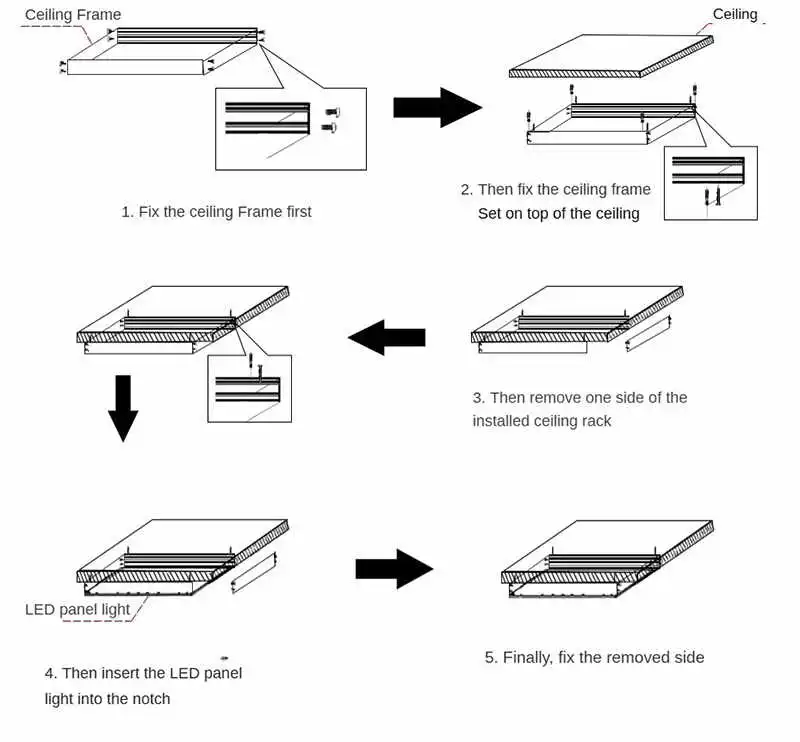
Step 1: Frame Assembly
Assemble the mounting frame per instructions. Hold it against the ceiling and mark drill points.
Step 2: Secure the Frame
Drill pilot holes, insert anchors (for drywall/concrete), and screw the frame into place. Use a level religiously.
Step 3: Wiring
Connect panel wires to household wiring (same color coding as above). Hide excess wire within the frame.
Step 4: Attach the Panel
Snap or screw the panel into the frame. Magnetic models click into place; others require tightening screws evenly.
Step 5: Final Check
Power on and admire your handiwork. Adjust the frame if the panel sits unevenly.
Suspended LED Panel Light Installation: Industrial Elegance
Ideal for: High ceilings, retail spaces, statement lighting.
Step 1: Mark Anchor Points
Determine desired height. Mark ceiling spots for anchors, ensuring even spacing (refer to panel size/weight guidelines).
Step 2: Install Suspension System
Secure ceiling hooks or anchors. Attach adjustable cables to the panel’s corners.
Step 3: Wiring
Thread wires through suspension cables (if applicable). Follow standard wiring protocol.
Step 4: Hang and Level
Raise the panel to the desired height. Adjust cables incrementally until perfectly level.
Step 5: Test Stability
Gently tug the panel to confirm it’s secure. Check for swaying—a sign of uneven cable tension.

Common Troubleshooting Tips
Even with proper installation, several issues may arise:
Flickering or Non-Operational Panels: Check for loose or faulty wiring connections, ensure the power supply and LED drivers are compatible and functional, and confirm the dimmer switch (if used) is LED-compatible.
Panels Not Lighting: Double-check power connection, driver functionality, and that all wires are connected and terminated tightly, with proper polarity.
Uneven Brightness or Color: Ensure power supply stability and compatibility, replace aging drivers, Quality problems, and contact the manufacturer and use calibration tools if available.
Ensure power supply stability and compatibility, replace aging drivers, and use calibration tools if available.
Safety First in Diagnosing: Always turn off the power before inspecting or handling electrical issues.
Maintenance and Additional Tips
Dust Regularly: Periodically clean LED panels with a soft, dry cloth to remove dust and maintain brightness, avoiding harsh chemicals.
Inspect Annually: Inspect wiring and mounting hardware for loosening or damage during regular maintenance checks.
Monitor Heat: Ensure there is adequate ventilation around the fixture for heat dissipation to prevent overheating.
If any troubleshooting efforts fail to resolve issues or if there is uncertainty with electrical work, consult a licensed electrician for professional assistance.
Conclusion
LED panel lights can be installed in a variety of ways, including in drop ceilings, on surfaces, or as suspended fixtures, each with its step-by-step procedure. Preparation, safety, careful alignment, and secure electrical connections are crucial to ensuring a safe and long-lasting installation. By following the appropriate steps, utilizing the correct tools and materials, and paying attention to safety and the manufacturer’s guidelines, you can enjoy bright, energy-efficient, and professional-quality lighting in any suitable space