12V LED Strip Lights or 24V? The Ultimate Comparison
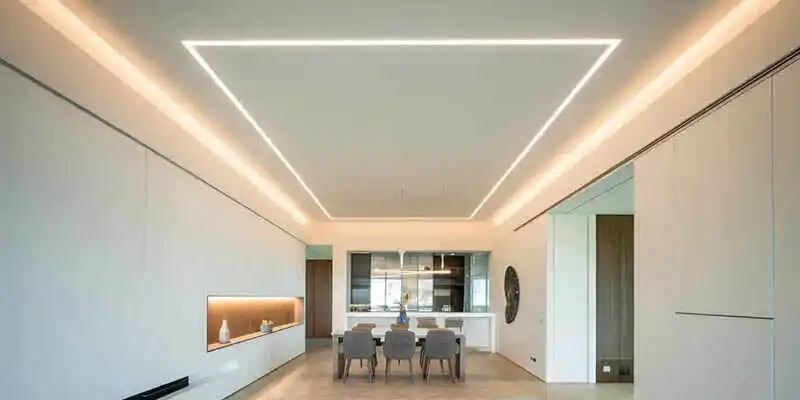
When choosing LED strip lights for your project, one of the key decisions is selecting the right voltage: 12V or 24V. These two options cater to different needs and installation scenarios. 12V LED strip lights are perfect for smaller, short runs, while 24V LED strip lights perform well in larger Lighting Projects where long, uninterrupted runs are essential. When you work on a small home project or a large commercial job, it’s important to know the differences. This knowledge can help you choose the best option for your needs.
12V LED Strip Lights vs. 24V: What’s the Real Difference?
Both 12V and 24V LED strips perform well and have many features in common. They offer consistent brightness and use the same LED chips. However, the two differ in terms of voltage, installation flexibility, and energy efficiency. With technology improving, the cost difference between them is minimal, so it’s no longer just about price. Let’s break down the core differences to help you choose the right one.
Operating Voltage
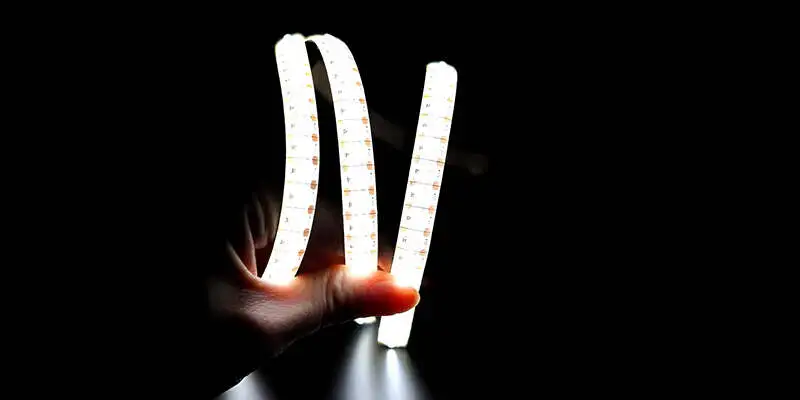
The main difference between 12V and 24V LED strips comes down to the voltage they need to operate. 12V strips use a 12-volt LED power supply, while 24V strips need a 24-volt LED Power supply. This simple difference can affect how each strip performs, particularly when you’re running them over longer distances. The 24V strips, with their higher voltage, can run longer without losing brightness, making them ideal for larger spaces, while 12V strips are generally better for shorter, smaller setups.
Current Demand
One of the features of 24V LED strips is that they carry one-half the current compared to 12V strips for the same power output. This means they can power more LEDs without needing thicker wires or additional components. Because of this, 24V strips are more energy-efficient and generate less heat, making them a better choice for long installations. On the other hand, LED Strip 12V requires more current, which can cause high energy loss, especially when used over longer distances.
Power Performance
One big difference between 12V and 24V LED strips is their power capability. 12V strips typically have lower power per meter, making them a good fit for softer ambient or decorative lighting. On the other hand, 24V strips can be customized for higher brightness, delivering much more intense light output. If you’re working on a project that demands higher brightness or can span a larger area, 24V Light strips are a great option.
Cutting Points
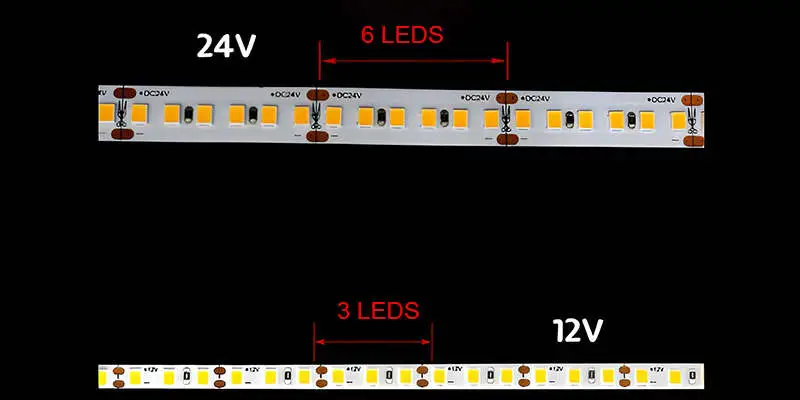
The cutting point is another difference. With LED strip lights 12v, you can cut every three LEDs, giving you more flexibility when adjusting lengths for smaller spaces or custom projects. In comparison, 24V strips allow cuts every six LEDs, making them more suited for larger runs where uninterrupted lighting is needed.
Voltage Drop
Voltage drop is a crucial consideration for longer LED strip installations. For 12V LED strip lights, noticeable dimming often occurs after about 5 meters due to voltage drop. While 24V LED strips handle this issue better, maintaining consistent brightness up to around 8 meters, they aren’t entirely immune—voltage drop can still appear in longer runs. This makes 24V strips a better choice for extended installations, but planning for proper power distribution is essential regardless of the strip’s voltage to ensure uniform lighting.
Maximum running Length
12V LED Strip Tape is typically limited to around 5 meters due to voltage drop. If you need a longer run, you’ll have to add additional power supplies, which can complicate the installation. In contrast, 24V LED strips can reach lengths of up to 8 meters without a drop in brightness, making them perfect for bigger, more expansive installations.
Energy Efficiency
Energy efficiency is another feature of 24V LED strip lights. Since they use less current to produce the same amount of light, they lose less energy and generate less heat, which means better performance over long distances. While 12V strip Lights are energy-efficient for smaller projects, 24V strips are the better option when you need efficient lighting over larger areas or longer runs.
Installation Ease
For smaller installations, 12V LED strip lights are often easier to install because they use common 12V power supplies. This makes them great for DIY projects and simple projects. On the other hand, 24V LED strips require a dedicated 24V power supply, which may add complexity for less experienced users. However, for larger projects, 24V strips reduce the need for multiple power supplies and wiring, making them easier to manage in the long run.
Heat Dissipation
Another factor to consider is heat dissipation. 24V LED strips tend to produce less heat due to their lower current draw, which makes them more suitable for longer, continuous runs without overheating. In contrast, 12V Light strips generate more heat, especially in long installations, which can impact both performance and lifespan.
Applications
12V LED strips are perfect for smaller, more localized projects such as under-cabinet lighting, accent lighting, or home décor. They are ideal for spaces where short lengths and lower power are required. 24V LED strips, on the other hand, are better for larger-scale projects, including commercial Lighting, outdoor lighting, and long, uninterrupted runs where consistent brightness and minimal voltage drop are essential.
12V LED Strip Lights vs. 24V: How to make the Right Choice?
When deciding between 12V and 24V LED strips, it depends on the scale and requirements of your project. For smaller, more straightforward installations, 12V LED strip lights are a great choice. They’re easy to install, cost-effective, and perfect for home, furniture, and cabinet light use. But if you’re working on a larger space or need long, consistent lighting, 24V strip lights are a better option. They offer more energy efficiency, maintain brightness over long distances, and are ideal for commercial or professional lighting projects. Understanding these key differences will help you select the right LED strip to bring your vision to life.