SMD vs. COB LED Strip Lights: Which One Should You Choose?

If you’re a lighting distributor, architect, interior designer, or contractor, you’ve probably asked yourself this before: SMD or COB LED strip lights—which one should I choose? It’s not always an easy decision, especially when you’re balancing design vision, performance expectations, and budget constraints. Let’s take a closer look at the differences so you can decide what works best for your project.
7 Main difference between SMD LED Strip and COB LED Strip
SMD Vs. COB LED Technology
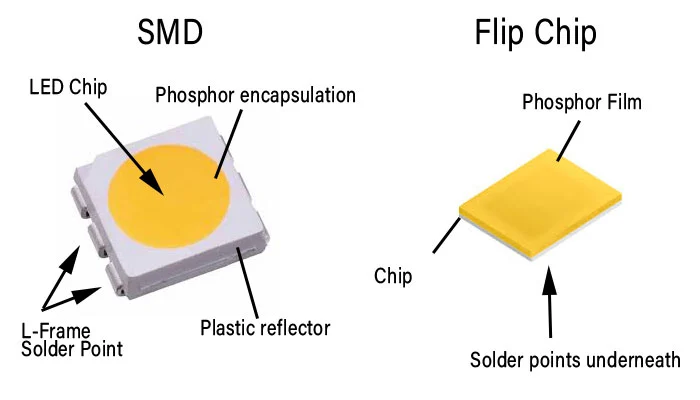
SMD LED strips are made up of individual LED chips mounted on a flexible circuit board. Each LED operates independently, giving you the flexibility to create unique lighting effects. They’re great if you want to customize color and brightness for different applications.
COB LED strips, on the other hand, use cutting-edge Chip-on-Board (COB) technology, where multiple LED chips are tightly packed on a single substrate. This design packs more LEDs into a smaller space, delivering smooth, uniform lighting without the harsh hot spots you often see with traditional strips.
Brightness
When it comes to brightness, SMD Vs COB LED strips each bring something different. COB LED strip Lights use less Power but consist of a high density of LEDs, giving off a smooth, Soft light,dot-free effect. They’re perfect for creating seamless ambient lighting.
On the contrary, SMD LED strips can be integrated with higher Power, which means they can get much brighter. With the Same LED quantity per meter as COB LED Strip, the brightness of SMD LED Tapes is absolutely higher than COB’s. So their brightness and Seamless look depend on how the diodes are arranged, and with the right design, they can reduce light spots while still delivering impressive illumination. This makes them a good choice for spaces that need bold, dynamic lighting or intense brightness.
Energy Efficiency
Energy Power is an essential consideration when evaluating efficiency options. COB technology is more power-efficient, using less energy to produce the same brightness, making it ideal for projects focused on energy savings and uniform Color. The compact design of COB strips also minimizes heat buildup. The energy savings of using COB LED strips can lead to significant reductions in operational costs, especially for commercial applications with extensive usage. Currently, we launch High efficiency COB LED Strip, up to 140Lm/W
On the other hand, SMD LED strips offer a wide range of efficiency depending on the model and design. For example, the 2835 SMD LED strip can reach up to 190Lm/watt, making it an efficient option for high brightness and High-efficiency Lighting applications, but SMD strips may consume more power at higher brightness levels compared to COB LED strips.
Heat Management
Energy efficiency is key to the performance and lifespan of LED strip lights. SMD LEDs tend to generate moderate heat, which, if not properly managed, can impact both their performance and longevity. To keep them running smoothly, SMD LED Light strips usually require additional heat sinks like aluminum channels or good ventilation to maintain optimal temperature levels.
In contrast, COB LED strips excel in thermal management. The design, with multiple chips mounted on a single substrate, allows for better heat dissipation, helping to keep temperatures in check. This efficient heat performance not only reduces the risk of overheating but also extends the lifespan of the LEDs, ensuring consistent brightness over time.
Flexibility
COB (Chip-On-Board) technology integrates multiple LED chips directly onto a single surface. This design is thinner and more flexible than SMD (Surface-Mounted Diode) strips, allowing the COB LED Light strip to bend easily, especially around larger curves.
As for the SMD LED Light strip, it has individual LED components mounted on a rigid PCB, which limits their flexibility. While they can bend to some degree, they struggle with tighter curves or more complex shapes.
In short, COB LED strips are more flexible than SMD LED strips, making them a better choice for installations that require complex shapes, curved surfaces, or tight bends.
View Angle
One of the key differences between SMD and COB LED strips is their beam angles, which affect how light is spread throughout a space.
COB LED strips typically have a 180° beam angle, meaning the light is spread across a wider area. This wide distribution is perfect for creating smooth, uniform lighting over large surfaces or achieving a seamless, dotless effect. It helps reduce shadows and harsh contrasts, making COB strips ideal for ambient and accent lighting in upscale interiors.
In comparison, SMD LED strips usually have a more focused 120° beam angle. While still fairly wide, it directs the light more precisely. This makes SMD strips great for task lighting or spaces where you need targeted illumination, such as under-cabinet lighting, retail displays, or highlighting artwork.
Color and Customization Option
When it comes to colors and customization, SMD LED strips take the lead in flexibility and functionality. While COB strips often come in fixed configurations with limited options, SMD strips stand out for their versatility. They offer extensive customization in color, brightness, and length, making them a go-to choice for both standard and specialized projects.
COB strips, though ideal for certain applications, can be harder to find in standard retail markets due to their more niche focus. In contrast, SMD LED strips are widely available and highly adaptable, making them a favorite among DIYers and anyone working on creative lighting designs.
COB LED Strip vs. SMD: Key Differences Every Buyer Should Know
| Difference | COB LED Strip | SMD LED Strip |
|---|---|---|
| Technology | Chip on Board without package | Surface-Mounted on Flexible PCB |
| Light Effect | Dot Free,continuous light output | Visible dot effect due to individual LEDs |
| Power | Low Power | High Power |
| Beam Angle | 180° | 120° |
| Color /CCT | unable to customized | Available in Customization |
| Heat Dissipation | Better Heat dissipation | Slightly low efficiency in Heat management |
| Flexibility | Highly flexible and can easily curve | Flexible |
| Energy efficiency | more energy-efficient | Efficiency depends on the type of SMD LED |
| Color Consistency | Superior color consistency and higher CRI | Varies; depends on LED type and manufacturer |
| Brightness | Uniform brightness along the length of the strip | May vary along the strip depending on LED spacing |
| Lifespan | Longer lifespan due to better heat management | Good lifespan but dependent on heat management |
| Application | Ideal for professional, architectural, and linear lighting | Suitable for decorative, ambient, accent, and dynamic lighting (RGB/RGBW) |
COB LED Strip
Seamless Light
SMD LED Strip
Visible Dot
Buying Guide: SMD Vs COB LED Strip
When deciding to use either SMD or COB LED strips in your projects, consider the following suggestions to make the best choice:
Application Consideration
For projects requiring high brightness and vibrant, color-rich lighting—such as party venues or retail displays—SMD LED strips deliver dynamic and impactful illumination. Their versatility and vivid output make them ideal for decorative applications where bold lighting is a priority.
On the other hand, for sleek, dot-free lighting designs in modern interiors or upscale commercial spaces, COB LED strips are the clear winner. Their seamless, uniform glow adds a touch of elegance and sophistication to any environment. The performance of SMD LED strips varies by model, offering options to suit a range of lighting needs and design preferences.
Budget Consideration
SMD LED strip is a more budget-friendly and versatile option, making them an excellent choice for large-scale or cost-sensitive projects. Their wide range of applications and affordability allow for creative lighting solutions without breaking the bank, making them particularly appealing for DIY projects or spaces requiring extensive coverage.
In contrast, COB LED strips come with a higher initial cost but deliver premium, seamless lighting effects that are perfect for luxury or high-end applications. Their smooth, dot-free illumination adds sophistication and elegance, making them worth the investment for projects where aesthetics take center stage.
When choosing the right LED strip for your project, it’s essential to balance your budget with your design goals. While COB strips and High-efficiency SMD LED strips may require a higher upfront investment, their energy efficiency and longer lifespan can result in reduced operating costs over time, making them a cost-effective choice in the long run.
Performance Needs
When planning for commercial lighting, Decoration Lighting, and Outdoor Lighting Projects, it’s crucial to evaluate your light output needs and ensure the strips meet industry standards.
If your priority is Dotfree Strip, wide beam angle, and energy efficiency, COB LED strips are an excellent choice. They deliver superior light efficiency and a smooth, uniform glow, perfect for applications demanding top-tier performance.
For those seeking versatility and functionality, SMD LED strips are the way to go. They offer a wide range of options, including high-efficiency models (up to 160-190Lm/W), constant current LED strips for stable performance, super long strips (10-30m per roll) for expansive projects, and an impressive array of colors. This adaptability makes them ideal for creative and customized lighting solutions.
Common Misconceptions About COB and SMD LED Strips
When deciding to use either SMD or COB LED strips in your projects, consider the following suggestions to make the best choice:
COB LED Strip is better than SMD LED Strip
SMD LED strips stand out with their exceptional flexibility and vibrant color options, making them an ideal choice for a wide range of projects. Thanks to recent advances in LED technology, modern SMD strips offer high CRI (90+) and boast impressive densities of 300 to 700 LEDs per meter. This design minimizes visible hotspots, ensuring a smooth and uniform light output, perfect for both decorative and functional purposes.
What truly sets SMD LED strips apart is their ability to achieve higher brightness and better luminous efficacy—something that COB strips struggle to match. This makes SMD strips ideal for projects that require powerful illumination or energy-efficient lighting, such as retail displays, task lighting, and large commercial spaces.
Beyond performance, SMD LED strips offer incredible versatility in terms of color options and customization. From tunable white to vibrant RGB/RGBW effects, their adaptability allows for limitless creativity. Whether you’re designing a home or a dynamic commercial space, SMD strip lights can bring your vision to life.
In summary, with their impressive brightness, energy efficiency, and versatile design options, SMD LED strips are still essential for today’s lighting projects.
SMD strips are outdated technology
SMD LED strip lights remain a reliable and relevant option in the lighting market, despite the rise of newer technologies like COB and CSP LED strips. Their versatility, excellent light output, and wide range of applications have kept them in high demand. SMD strip Lights are commonly used for indoor decoration, accent lighting, and even outdoor settings with waterproof versions, offering a variety of color options and strong brightness.
While COB and CSP technologies may excel in light output and color consistency, SMD LED strips continue to be favored for their reliability and adaptability. They meet diverse lighting needs, especially in projects that require flexible designs and a broad spectrum of color choices. Despite the continuous evolution of LED technology, SMD strips remain a trusted choice, holding their place in the market due to their proven performance and versatility.
COB LED Tape cannot be used outdoors
COB LED strips can be just as suitable for outdoor use as SMD LED strips, as long as they have the proper IP ratings (IP65, IP67, or IP68). These ratings ensure the strips are protected from dust, moisture, and water exposure, allowing them to withstand various weather conditions. With the right IP protection, COB LED strips are still reliable for outdoor lighting applications, offering the same durability and performance as their SMD LED Strip lights. So, as long as you choose the right rated COB strip, there’s no need to worry about its ability to handle outdoor environments.
Conclusion
Choosing between SMD and COB LED strips comes down to your specific project goals and lighting requirements. SMD LED strips excel in versatility, functionality, and affordability, making them ideal for a wide range of applications. On the other hand, COB LED strips offer premium, seamless lighting perfect for achieving sleek, high-end aesthetics.
Whether you’re enhancing interior decor, tackling an outdoor project, or designing a luxurious commercial space, each technology has its strengths.
Great lighting doesn’t just brighten spaces—it creates memorable experiences. By selecting the right solution to match your purpose and style, you can get the perfect balance between functionality and beauty. If you’re unsure, reaching out to a lighting expert can ensure you make the best choice for your needs.