LED Spotlight or LED Downlight? Understand the Difference Before You Choose

When designing any interior or commercial lighting layout, two of the most common options you’ll come across are LED downlights and LED spotlights. While they may look similar at first glance and both use LED technology, their functions, aesthetics, and lighting effects are quite different. Understanding these differences between LED Spotlights and LED Downlights will help you make smarter lighting choices tailored to your space and needs.
What Is LED Spotlight?
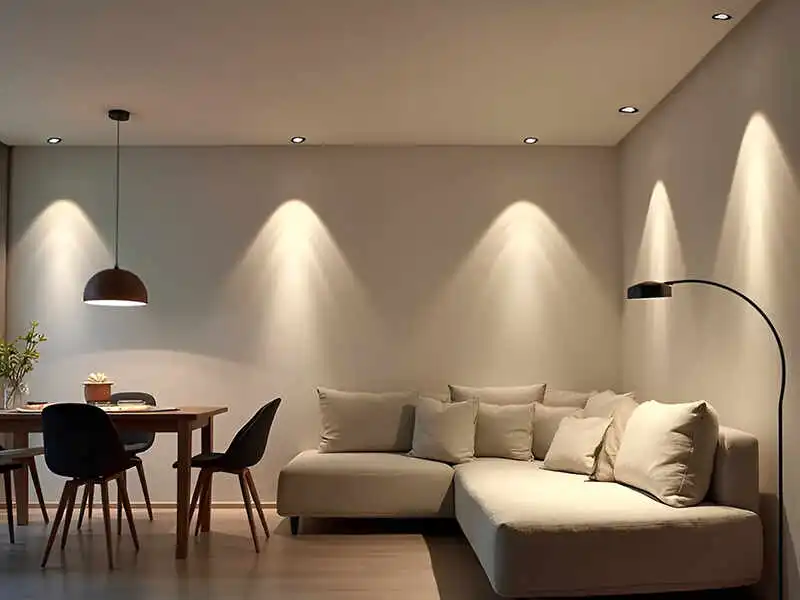
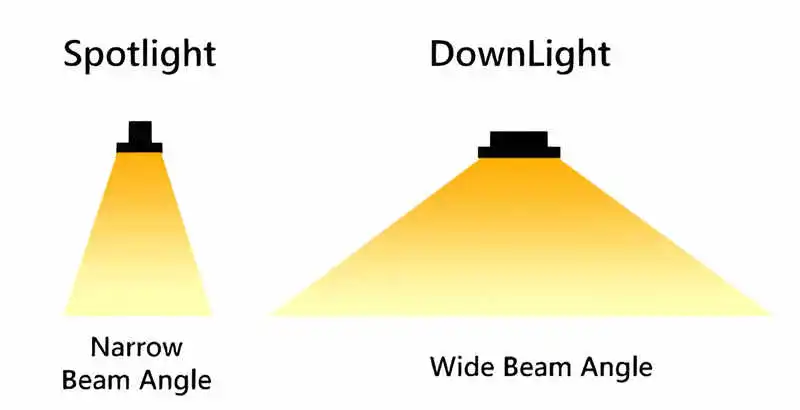
LED spotlights are designed to produce a narrow, focused beam of light — typically between 15° and 45°. This tighter beam angle makes them perfect for highlighting specific objects or areas, such as artwork, architectural features, merchandise displays, or any space that requires directional lighting.
Spotlights are often mounted on ceilings, walls, or tracks, and are adjustable to target light exactly where it’s needed. Rather than providing general ambient lighting, spotlights are used to create visual interest, enhance depth, and draw attention to key elements in a room. Their precise illumination makes them a popular choice in galleries, retail stores, hospitality environments, and even in residential settings for accent lighting.
What Is LED Downlight?
In contrast to spotlights, The LED downlight is a type of recessed lighting fixture designed to sit flush with the ceiling, creating a clean and streamlined look. Its minimalist design makes it almost invisible in modern interiors, allowing the light — not the fixture — to take center stage. Downlights typically emit a wide beam, ranging from 60° to 120°, which helps distribute soft, even illumination over a broad area.
This makes downlights ideal for general ambient lighting in spaces like hallways, offices, shopping malls, and homes. Their ability to provide glare-free, uniform brightness makes them a go-to solution for creating a comfortable and well-lit environment without harsh shadows or dramatic highlights.

8 Key Differences Between Downlights and Spotlights
The structural differences between LED downlights and LED spotlights are primarily reflected in their installation methods, size, and optical components:
Structural Differences: Shape, Mounting & Optics
The most noticeable distinction lies in their physical structure and optical components.
LED Downlights: Recessed into the ceiling, creating a flush and minimalistic look. Typically requires a larger cutout (4–8 inches) with a low profile. Designed with wide reflectors or diffusers for soft, broad illumination.
LED Spotlights: Surface-mounted, track-mounted, or adjustable fixtures with a more visible form. Usually smaller in diameter (2–6 inches) but may have deeper heat sinks. Equipped with precise optical lenses or reflectors to control a narrow beam.
Beam Angle and Light Focus
One of the most significant differences between LED downlights and spotlights lies in their beam angles and how they distribute light:
LED Downlights offer wide beam angles (60° to 120°), delivering soft, even light across a broader area.
LED Spotlights use narrow beam angles (typically 8° to 45°), focusing light in a single direction to draw attention.
Together, these differences mean downlights are well-suited for lighting larger areas, while spotlights excel at creating focal points and adding visual drama.
Installation and Adjustability
Installation methods further separate these two lighting types in terms of versatility and appearance.
Downlights are fixed once installed and cast light directly downward. Their recessed nature gives a minimalistic look that doesn’t interfere with ceiling lines—but also means limited adjustability after installation.rd.
Spotlights are often surface-mounted and come with rotatable or tiltable heads, This adjustability makes spotlights a versatile solution in dynamic environments like galleries, retail stores, and modern homes.
Design and Aesthetics
From a design standpoint, the two types serve different visual roles.
Downlights are intended to be discreet, seamlessly integrating into ceilings for a clean, modern aesthetic. They maintain the architectural integrity of a space without drawing attention.
Spotlights, in contrast, can double as design features. Available in a variety of finishes, shapes, and mounting options, they can either complement the interior décor or act as bold accents, contributing to the overall visual narrative of the space.
Application Scenarios
Choosing the right type often depends on the lighting function and environment:
Downlights: Best suited for ambient or general lighting—covering broad areas uniformly. Common in homes, offices, and commercial spaces.
Spotlights: Used for task or accent lighting. Popular in galleries, retail environments, showrooms, and for highlighting design elements.
In many cases, combining both downlights and spotlights within a single space creates layered lighting that enhances both function and atmosphere.
Lighting Effect & Visual Experience
The impact on the space also differs dramatically:
Downlights: Provide soft, diffused light that minimizes shadows and glare. Helps create a calm, welcoming environment.
Spotlights: Deliver bright, focused light with strong contrast and shadows. Adds drama, depth, and visual interest to a space.
Installation & Maintenance
When choosing between LED downlights and spotlights, it’s important to consider the installation method and long-term maintenance.
LED Downlights are commonly recessed into the ceiling to create a seamless, modern look. This typically requires precise cutouts and professional installation, especially for large-scale or low-clearance ceilings. However, surface-mounted downlight models are also available for spaces where recessed installation is impractical or undesired. Once installed, most downlights are fixed in place and not meant to be adjusted frequently.
LED Spotlights offer more flexible mounting options. They can be surface-mounted, track-mounted, or recessed, depending on the project’s design and lighting goals. Track-mounted or surface-mounted spotlights are generally easier to install and reposition, making them ideal for spaces where lighting direction may change over time, such as galleries, showrooms, or multifunctional areas.
Ultimately, the choice depends on the ceiling structure, the desired lighting effect, and the level of adjustability needed for the space.
Energy Efficiency & Cost Considerations
Both LED downlights and LED spotlights are highly energy-efficient compared to traditional lighting sources like incandescent or halogen lights. However, there are some differences in terms of cost and energy use:
LED Downlights are generally more affordable due to their simpler design and broad light distribution, which requires fewer complex components.
LED Spotlights, especially high-end models with advanced optics or adjustability features, tend to be more expensive upfront but may provide better control over lighting and energy use over time.
Table: Key Comparative Lighting Differences
| Features | LED Downlights | LED Spotlights |
|---|---|---|
| Installation | Recessed into the ceiling (flush, low profile) | Surface/track mounted (can protrude, adjustable) |
| Beam angle | Wide (60°–120° or more) | Narrow (8°–45° typical) |
| Light distribution | Broad, even, ambient | Focused, intense, accentuating |
| Purpose | General/ambient lighting | Accent, task, or feature lighting |
| Adjustability | Fixed, downward only | Highly adjustable, directional |
| Appearance | Minimalist, blend with the ceiling | Visible, sometimes decorative |
| Typical uses | Living rooms, offices, kitchens, corridors | Museums, galleries, retail, displays, features |
| Atmosphere created | Soft, uniform, spacious | Dramatic, high-contrast, focus |
| Energy efficiency | High | High (when using LED tech) |
| Price range | Generally lower | Can be higher (advanced optics/features) |
Which One Should You Choose?
Choosing between LED downlights and spotlights isn’t about which one is better—it’s about what fits your space and purpose best.
If you’re looking to create an evenly lit environment that feels open and welcoming, LED downlights are your go-to option. They’re ideal for spaces where general illumination is key, such as living rooms, offices, or commercial areas. Their wide beam angle covers large areas uniformly, reducing shadows and giving the space a balanced, well-lit feel.
On the other hand, LED spotlights are perfect when you want to draw attention to something specific. Whether it’s a piece of art, an architectural detail, or a retail product display, spotlights offer focused light that enhances contrast and adds drama. Their adjustability also makes them a favorite for dynamic environments like galleries, showrooms, and modern kitchens.
For many projects, the best lighting design often involves a combination of both—downlights for overall brightness and spotlights to add depth and focus. Think about how you use the space, what features you want to highlight, and how flexible the lighting needs to be. That way, you can tailor your lighting plan to balance function and aesthetics seamlessly.
Conclusion
In summary, selecting between the two should be based on the desired lighting effect, functional requirements, and the spatial context, often with the best lighting environments combining both for maximum flexibility and impact. By understanding the key differences between LED downlights and spotlights, you can design lighting schemes that are both beautiful and practical.
Looking for professional LED lighting solutions? At Sunroleds, we offer high-performance downlights and spotlight designed for long-term reliability, elegant design, and energy efficiency. Whether it’s for your home, retail project, or commercial space, we’re here to help you shine.